


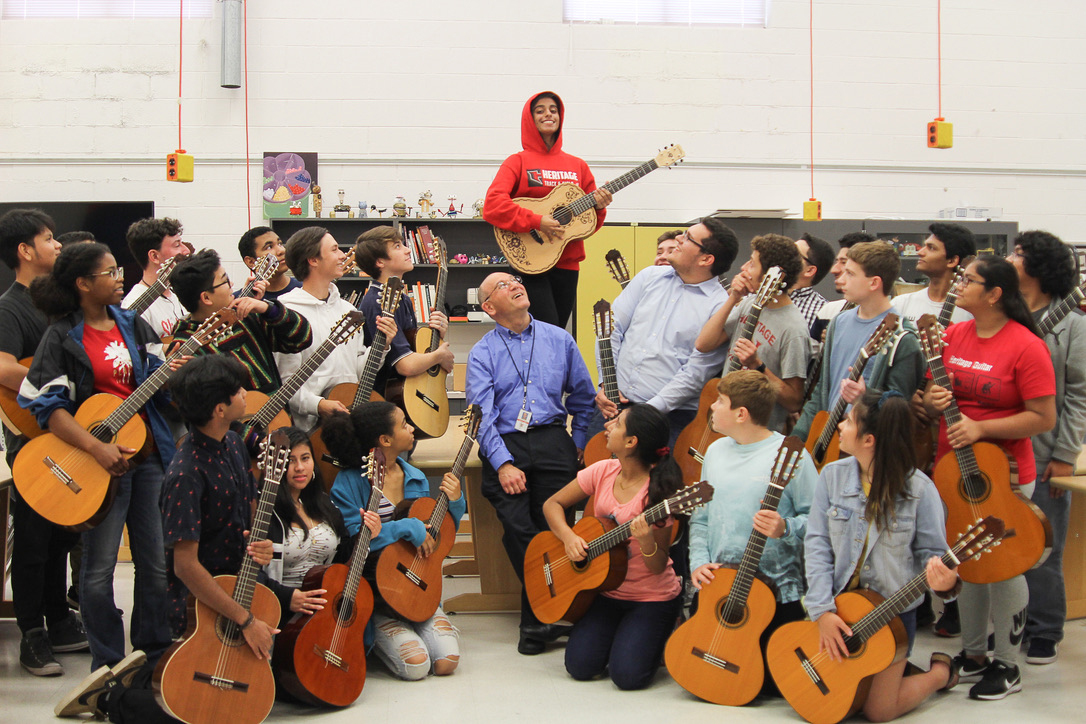




The Habits of Mind framework, a set of 16 habits or dispositions, provides individuals strategies for life challenges, including subject area mastery. Two professors, Arthur L. Costa and Bena Kallick, developed the framework. This article focuses on applying these powerful and versatile habits to vocal and instrumental music students. Keep in mind that the habits can apply to various aspects of music education such as music theory, composition, lyric writing, performance and history of music. Also remember to broaden student horizons by helping them become knowledgeable about world music to encourage participation in a global musical community.
Habits of Mind has been around for 25 years. Educators have published ways to apply the habits to several subjects. Consider the following table that suggests ways to align all 16 habits to music education objectives.
How the 16 Habits of Mind Support Music Education
Persisting Remember that consistent vocal or instrumental practice will get results.
Managing Impulsivity Have discipline by scheduling regular practice for singing, playing, and reading music.
Listening with Understanding and Empathy Auditory skills are an important part of mastering music, whether listening to your instructor, your classmates, recorded or live music, or self-monitoring your own musical performance.
Thinking Flexibly Consider alternate ways to use your voice or instrument to create music.
Thinking about Thinking (Metacognition) Be aware of the processes involved in making good music. What must you do to master a song vocally or instrumentally?
Striving for Accuracy As you practice singing or playing, envision making it through a song with precision. How do you feel when you have mastered a difficult set of musical bars or an entire song?
Questioning and Posing Problems Decide to ask your teacher about any parts of a song that you are uncertain about. Ask questions about musical concepts to gain better understanding.
Applying Past Knowledge to New Situations When you learn a vocal or instrumental technique, how can you apply it to new songs?
Thinking and Communicating with Clarity and Precision Music is a universal form of communication. Your singing voice or instrumental playing communicates powerful messages. How can you perform music clearly and precisely?
Gathering Data through All the Senses Think about the different senses used to create music. How can you use sight, hearing, touch, smell and taste to enhance your musical performances? Do you ever observe a sixth sense when working with music?
Creating, Imagining, Innovating Think about creating lyrics or a song melody. How does your imagination get involved in creating music? How can you create new music by adjusting your approach?
Responding with Wonderment and Awe Listen to a new song and notice the vocal delivery, the orchestrations, the instruments, the lyrics or the song’s main message. How does your close attention bring about wonder or awe?
Taking Responsible Risks How can you expand your approach music once you have mastered basic concepts and techniques?
Finding Humor Learning music is an imperfect process. How do mistakes in your performance make you a better musician? How can laughing at yourself help you improve your musical abilities?
Thinking Interdependently Collaborate with classmates, family and your instructor when creating music and making well informed choices.
Remaining Open to Continuous Learning How can you become more proficient musically and expand your repertoire? What opportunities are available for you to learn music? Consider in person, online and materials for expanding your musical horizons.
Summary
The 16 Habits of Mind can be used to enhance mastery of music concepts, techniques and skills. Reach out to colleagues versed in the habits or refer to the resources below. Sharing the habits can result in a population of well-equipped music students who build upon basic skills that lead to proficient mastery of musical performance.
Resources
- Costa, Arthur L. and Bena Kallick. 2008. Learning and Leading with Habits of Mind: 16 Essential Characteristics for Success. Alexandria: ASCD.
- Kallick, Bena and Allison Zmuda. 2017. Students at the Center: Personalized Learning with Habits of Mind. Alexandria: ASCD.
- Mason, Keith. 2017. Musicals Foster Habits of Mind. Teachers Matter Magazine 34,5 6-59.
- Website: The Institute for Habits of Mind www.habitsofmind.org
 Keith Mason, Ph.D. advocates for music and musicals in the curriculum. He is currently writing a book entitled Musicals across the Curriculum.