

SBO+: This is a follow-up to the article in our July 2026 issue by Tracy Heavner. If you missed it, you can view all of our past issues at SBOplus.net. It can help any wind player who has braces.
What is a Cover?
The term “cover” refers to a dental device placed over the lower teeth to provide a cushion between the teeth and lower lip as the embouchure is formed. It creates a smooth contact point for the lower lip and teeth and eliminates teeth abrasions sometimes made on the lip even when the embouchure is formed correctly. By providing a more comfortable contact point for the lower lip and teeth, it allows the musician to practice and perform without experiencing any pain in the lower lip.
Covers may be made from a variety of materials and can be temporary or permanent. Temporary covers are made from paper, plastic or a material consisting of wax and fiber often found in denture pads. Temporary covers are easy to make and will last from several days to several weeks depending upon the material.
Permanent covers can be made by a dentist or by yourself. Here’s a step-by-step procedure for making a permanent cover. This is inexpensive, easy to follow, and will allow players an opportunity to adjust it.
Making a Permanent Cover for the Lower Teeth
To make a permanent cover, use material from youth athletic mouth guards that are used by athletes to protect the teeth. Youth athletic mouth guards are used because the material is thinner and easier to work with. However, this material is much more difficult to work with than the wax and fiber material of denture pads used to make temporary covers and should only be used after the musician has become accustomed to making and playing covers made from other materials.
Steps
(1) Purchase a youth athletic mouth guard found in many sports and department stores. They come in two colors, transparent and black. A transparent color may be preferred because it cannot be seen in the mouth.
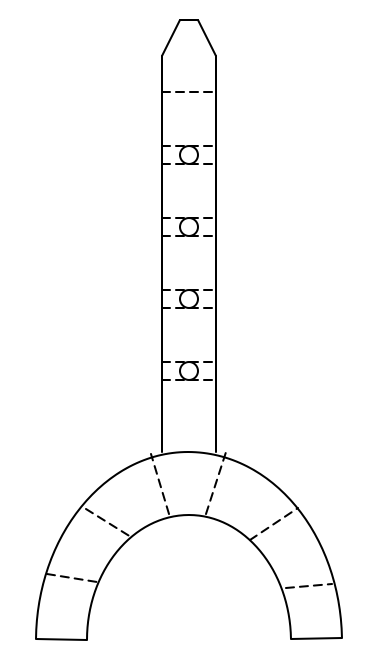
(2) The mouth guard should be cut into the appropriate size to cover the bottom four teeth. A small rectangle shape with rounded corners is recommended. Although different parts of the mouth guard may be used, the center section is preferred and not the sides of the mouth guard due to their variation in thickness. However, the strap that is designed to hold the mouth guard to the football helmet may also be used.
Pattern for Cutting Athletic Mouth Guards
The cover should now be placed on a microwave safe plate or on a paper towel and heated in a microwave. The microwave setting should be on “high” and the cover should be heated for approximately three minutes. The heating time may vary depending on the microwave. This will soften the material making it ready to mold to the lower, four front teeth.
(3) After the cover is heated, carefully remove it. The temperature can be checked by lightly touching the cover with a finger before picking it up. If the cover is too hot to be picked up, it should be allowed to cool but not for too long. The material needs to remain flexible so it can be molded to the teeth.
(4) After the cover is cool enough to be picked up, it should be placed over the bottom four teeth and gently pressed around them. The cover will instantly conform to the teeth as it continues to cool. Make sure the cover does extend too far down on the teeth where it may touch and irritate the gums.
(5) This process of heating and molding the cover may take several attempts before a perfect fit is achieved. These covers, although more difficult to make, will last indefinitely. If for some reason the lower teeth do eventually cut through the cover, the cover can be reheated in the microwave and molded to the teeth again.
Using a Cover
When playing with a cover for the first time, be patient to allow the embouchure to adjust to the additional cushion that is now over the lower teeth. It may feel uncomfortable initially but after a short period of adjustment, you will be able to perform as they have always done but with the added comfort of a cover. Musicians will also notice they can practice for longer periods of time without injury to the lower lip. Although the use of a cover can provide for more comfortable practice sessions and lengthen practice time, it should not be used as a remedy for incorrect breath support, embouchure or mouthpiece and reed selection. Covers should only be used after a correct and stable embouchure has been established and proper selection of mouthpiece and reeds have been made.
Summary
There can be many causes of a sore or sensitive lower lip. Improper breath support, incorrect embouchure formation, improper mouthpiece and reed selection, unusual sharpness of lower teeth and wearing braces are all factors that can contribute to a sore lower lip. If musicians continue to practice with a chronic sore lip with no solution in sight, frustration along with impeded progress is most likely to occur. Those who have a chronic sore lip should investigate all the probable causes so a remedy can be discovered to alleviate the problem. A permanent cover might be the solution. The decision to use or not to use a cover is a choice each musician must make. For musicians who have a chronic, sore lower lip, covers can provide a practical solution and return the joy to performing.
