
Since getting involved in modern band and popular music education over the past 25+ years, I have seen it grow from a niche subject in after school and lunch club programs to a robust class offered alongside many traditional music classes, At the NAfME Research conference in Long Beach in October, the discussion was no longer about “should we” teach modern band, but about “how do we” and “what does great instruction in popular music” look like. In my role, I have observed hundreds of teachers and students across the country, including three stellar programs in the past month, in Los Angeles, Philadelphia, and Charleston. All three programs looked very different, and here are some things I saw.
In Charleston, I saw an amazing elementary school where the teacher had organized the class in stations. Students would walk into the class, and see their rotation for the day, organized by color and instruments. They would then head to their instrument, set it up, and everyone would play. The teacher had sourced instruments from many different locations, the school, non-profits, donations through social media, and there were enough of each instrument for students to rotate between them, One student started as the “blue” guitarist (next to the yellow, red, orange and green ones) and they played a popular song together as a full class. The teacher would give feedback, and then they would switch, that student then moved onto the “blue” keyboard station. In the short class period, every student took a turn playing guitar, keyboard, drums, and singing, Throughout the class, students moved excitedly to every instrument, beaming with joy at being able to play so many different parts.
In Philadelphia, I saw a great high school program that had a lot of student choice and informal learning spread throughout. The teacher reviewed the concepts they had done previously and laid out some groundwork for their first day of working in small groups. The goal for the day: to take a popular song they liked and then change the feel of the song to make it sound like a different genre, specifically incorporating Latin percussion to give it a salsa or cumbia feel. Students grouped up and worked together to figure out who would play what, determine what parts needed to be changed to create the new feel. Students excitedly experimented with different bass and drum parts, or changing the rhythm of riffs and melodies to fit. There was a sense of camaraderie in the classroom, a community of peers that liked to create together.
In Los Angeles, I saw a fantastic elementary program with a teacher that meets the students where they are. They class was taught bi-lingually so his largely Latine program would make sure every student understood the assignment while also working on new language skills, The music choices were picked by students as well as the arrangements, and the drummer would call out the beat before they dove into the songs, including choreography. The teacher would emphasize improvisation for all, starting simply with two and four note choices for their solos over long vamps so students could work on dexterity and co-ordination while exploring the aural landscape. Students sight-read charts on the board that the teacher had developed that included a variety of notation systems – from chord charts to comping patterns to tablature and staff notation, At the end of the day, the teacher had a ton of students for after school practice, and many of his older students, now in middle school, would come by and work with the younger students, building the local community of music makers.
Overall, what does great modern band teaching look like? At Music Will, we believe there are measures of success you can see that include all of what I witnessed. This includes student decision making, from repertoire to running the rehearsal to creating a space they all feel comfortable and heard in. This means creative music making from comping to improvising to song writing. The teacher often acts more as a facilitator, giving students agency in the process. There is a lot of approximation and scaffolding, so all students can participate at the level where they are and make music with their peers who may be ahead or behind their level of proficiency. The instruction was mostly “Do before Explain,” where they would play new concepts and then talk about them, leading to a lot more time spent making music. But most importantly, there was a ton of student engagement, buy-in, and joy.
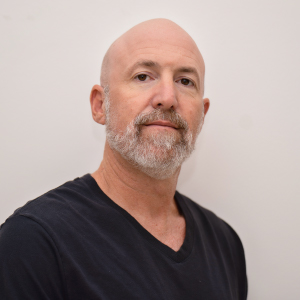
Dr. Scott Burstein is the Director of Strategic Initiatives for the non-profit Music Will, and previously taught 12 years of public school music, including modern band, marching band, jazz band, and AP Music Theory.