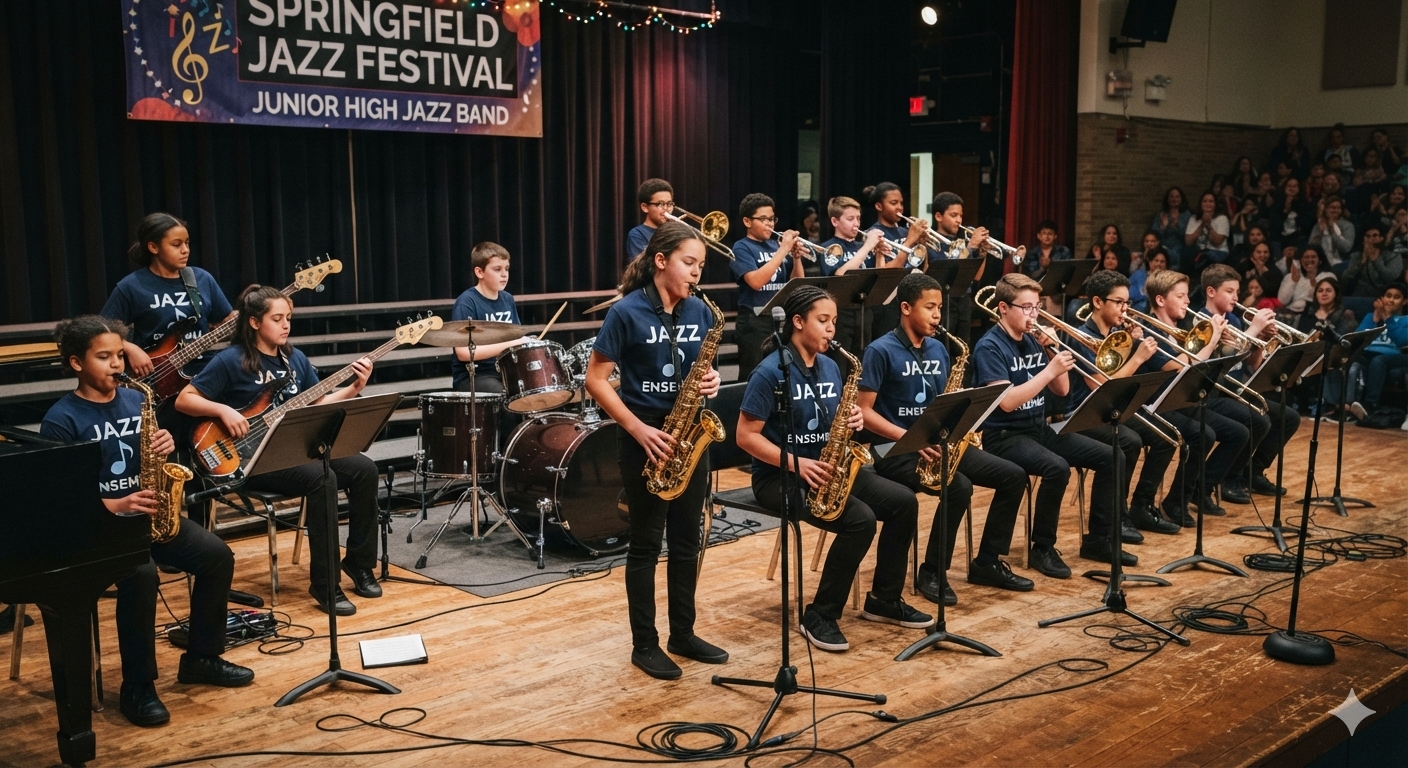

It is very common for a teacher with little to no jazz experience to suddenly find themselves teaching a jazz ensemble for the first time. Whether it is because your primary instrument is not one traditionally found in a jazz ensemble or you just haven’t had the opportunity to perform in the genre, there is no need to panic. Music is still music, but just as in the concert ensemble…programming is everything!
Beginning of the Year
No matter the experience level of your ensemble, it is important to start the year with programming around concepts. Using daily exercises and warm-ups to develop these concepts at the start of the year is a must. However, quality repertoire selection to solidify these concepts contextualizes the time spent on these exercises and validates them from the students’ perspective.
Do not be afraid to start the year performing music one to two levels below their maximum ability level to allow students to master concepts. Taking a step back and working on mastery, no matter the difficulty level, will pay dividends as the year progresses.
Assessing Difficulty of Jazz Literature
Like most directors, you may rely on the music publishers to be the first line of defense when deciding the difficulty of the music you are purchasing and performing. While this is a good start, publishers tend to have a wide range within their level ratings and differ between publishers. Therefore, take a few additional things into account.
Style can be a large source of difficulty, especially when dealing with younger groups. We always want to program a swing tune, however younger groups tend to have faster success on rock and basic Latin tunes due to the even eighth note subdivision versus swing’s triplet-based swing subdivision. Rock and basic Latin tunes can do a great job of teaching articulation, ensemble balance, and rhythm section unity while they build up their swing feel. Most young drum set, bass, and guitar players feel more comfortable in the rock genre especially. Having a Latin and rock tune to compliment a swing tune gives the students more exposure to different styles of music. This is something jazz is all about.
Tempo is also a large determining factor. In a swing style, the metrical nature of the eighth note subdivision drastically effects how the swing is performed. A faster swing is more articulation-based, while a slow swing is done in a more metric subdivision. This makes medium swing tunes a great place to start with developing groups. Also, watch those funk tunes! While slower, they are notorious for being difficult to read because of the complex rhythms that get shoved into those slower tempos. Bass parts also tend to be much more difficult in this style as well.
Let’s Talk about that Rhythm Section
For most young teachers, with jazz experience or not, the rhythm section tends to be the area that proves to be the most challenging to teach. For developing jazz ensembles, make sure the parts are written out and not just “slash time.” “Slash time” music is when the music only displays the chord symbols above the part and slashes to represent time underneath. While this gives advanced players the freedom to determine their own part/voicing based on the chord changes of the tune, it gives little to no instruction to a younger player on how to develop their part. Any guitar part may still contain slash time, but good publishers now usually include chord diagrams as a resource for the students. A well-written drum set part will also still contain a little bit of slash time or measure repeats but will do a good job of diagramming out the different lines of the drum set part and give example patterns for every style in the tune.
The Hidden Beast Below the Surface
One of the more easily overlooked areas when making repertoire choices for a developing band is the solo sections. Improvisation is by far the hardest concept to teach for music teachers with little jazz experience. Hopefully through the insecurity most teachers feel surrounding this, we realize that giving our students a chance to learn this valuable skill will do nothing but grow their confidence as musicians.
First, look at what instruments have the solo changes written in their parts. It is easiest to select pieces when you have students on those parts who are not afraid to take a solo. However, you do not have to only give solos to those parts. One of my favorite aspects about jazz is that you are able to play with form and solo sections to give as many students the opportunity to be featured as possible.
Second, be sure to look at the complexity of the chord changes. Some very simple arrangements can still be written over some pretty complex chord changes. Try to steer towards tunes with changes that only use a couple of chords in their solo sections or are a basic blues. This allows a solo to be written in the key of the tune and sound good. It is important to give them a safe place to experiment. Jazz is all about expression and having a great time with the music!
Peter Sampson is the Director of Bands at Whiteland Community High School in Whiteland, Indiana, President of the Indiana State School Music Association, Vice-President of the Indiana Jazz Education Association, and a member of the Jazz Education Network’s Education Committee.