
Reprinted from ChorTeach with permission from ACDA.
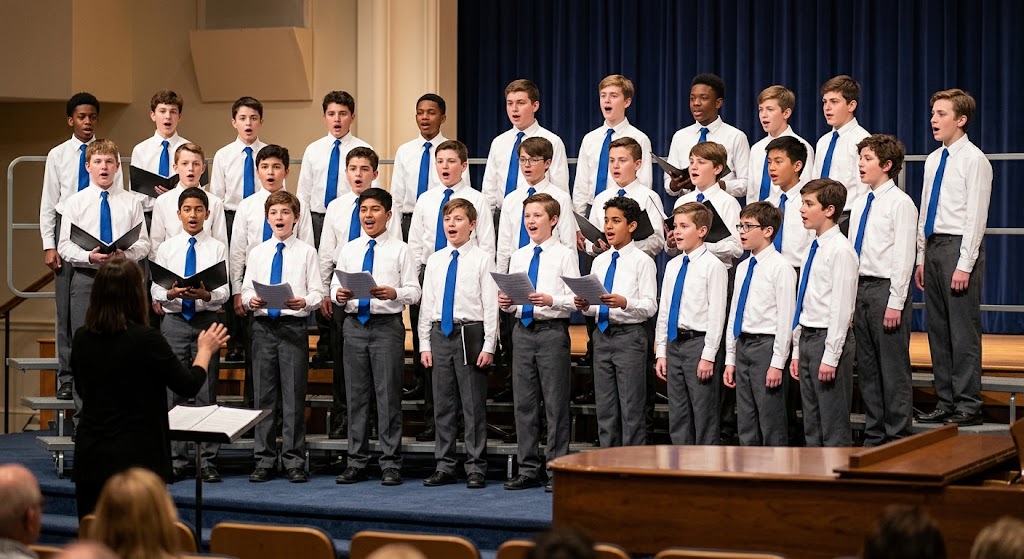
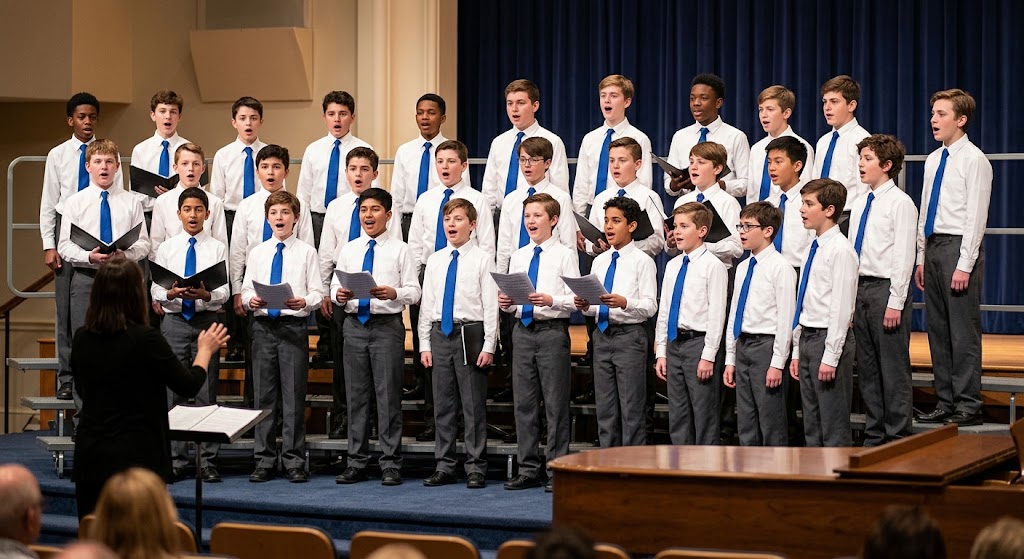
Ah, the joys of being female and teaching middle school boys! The challenges are enormous, and, sometimes, the rewards are difficult to recognize. I’ve been teaching middle school boys for 18 years now, and there are days when I want to pull my hair out. I’m in a new school this year, and the seventh and eighth grade boys’ choir I inherited is, to say the least, challenging; however, some of the greatest joys in my teaching career have come from those wiggly, loud, squirmy male creatures.
When you manage to get middle school boys singing well and on your side, they are the most loyal people on earth. Several times in the past few years I have been stopped at the mall or in a grocery store by a tall, handsome young man who said, “Ms. Phillips (or Ms. Self – my maiden name), do you remember me?” Lo and behold, that handsome young man was once a hyperactive seventh-grade tenor on the first row. Those young men take great pleasure in telling me about their adult lives and the things they have accomplished. It’s wonderful to see them grow into responsible adults, especially those for whom responsible adulthood seemed like a remote possibility when they were attending middle school!
It was such a thrill to see many of my former students give an amazing concert at last year’s Birdville HS Chorale performance at the Texas Music Educators Association conference. If you had told me a few of those boys would have ever performed at TMEA, I would have fallen out of my seat laughing. One of them even came up to me just before the concert and apologized for all his bad behavior in middle school!
Many things must be considered when teaching middle school boys, especially if you are female. The first is getting the boys on board with singing in the choir. We’ve all had to fight the “choir is girly” stereotype. One way to counteract it is by being sure you never embarrass the boys onstage. Boys 11-14 years of age are incredibly observant music critics. They can sniff out trite music quickly. They’ll call it “stupid,” but trite is what they mean. Don’t choose a 2006 song arranged in a 1950’s style. Instead, pick songs from that era–Rock Around the Clock or All Shook Up. Middle school boys also, as a rule, hate novelty songs. Instead, find funny folk songs, e.g., I Wish I Was Single Again or That’s Where My Money Goes from the UIL Prescribed Music List.
In all my concerts, I make sure the boys have one showcase number that’s funny or exciting. Doing so makes choir “cool.” The boys respond positively and take pride in their membership in the choir. Next, you must manage/control them. That’s much easier said than done. Ask anyone who has taught middle school choir for a while, and they can tell you hilarious stories about the day discipline fell apart in the non-varsity boys’ class. It happens to all of us whether we’ve been teaching for two years or 20. It helps you cope if you accept the fact that boys simply learn louder than girls. The other thing you must accept is how much boys need to physically move during a rehearsal. Take their nervous energy and put it to good use by having different standing formations. In my classes, we warm up in one or two places and then move to another to sight read. When we rehearse literature, we have one location for two-part music and another for three-part singing. Moving to a different place four to five times during each class period will make a big difference.
Teacher demeanor is truly important. Anyone who has taught middle school choir for very long has probably wanted to scream at certain times, but it’s not productive. Adolescent boys love to try to goad you into yelling because it means they have “won.” Getting silent often works well. When my boys get rowdy or won’t listen, I say “I’ll just wait for …” in a stern tone of voice and then say nothing until they calm down. It works for me. Next, talk less and sing more. I believe all students, especially adolescent boys, learn more by doing than by listening.
Another ingredient in managing middle school boys is your consistency and firmness. The rules and consequences cannot vary from day to day. Find a plan and stick with it. While being firm, you must be compassionate and fair. If your best boy has an uncharacteristic outburst one day, find out what caused it before you react. Remember, fairness is not about everyone getting the same treatment. It’s when each guy gets what he needs. I have a theory that in every young tenor-bass choir, there is one boy who is a catalyst. Almost everything happening in the room revolves around this child. This can be a good thing. If the catalyst is president of National Junior Honor Society, first chair all-region bass and an altar boy at church, everything rolls along quite nicely. Unfortunately, some of the time—well, okay, most of the time–the catalyst is not a joy to teach. The class clown is often a catalyst who is looked up to by his peers. The other boys can’t wait to see what this kid will do next! Step one is to identify him. If it seems like the entire class is a nightmare, look more carefully. Find the boy who is in the middle of everything that goes right or wrong. There’s your catalyst. First, try to get him on your side. Praise anything he does that is right. Give him extra responsibilities like checking roll or taking something to the office. If positive reinforcement does not work, then quickly change tactics. Be sure to discipline him, and only him, the moment trouble starts. Blanket discipline of an entire section or class creates anger and even rebellion. The catalyst must understand you mean business.
I have a current student who fits this mold perfectly. He is the ultimate class clown and the best bass in the eighth grade. A combination of positive and negative reinforcement has significantly changed his behavior for the better. Because he is such a good singer, I often use him as a model for the other boys and encourage him to try out for solos—positive reinforcement. He also knows he gets no warnings or conferences with me when he messes up because of his past behavior. It’s one strike and he’s out to do a written assignment in isolation—negative reinforcement. The combination has changed his classroom behavior to a manageable level most of the time.
Finding appropriate literature is another important aspect of teaching boys. Before you can choose literature, you need to hear each boy individually so you can determine his range and voice part. I classify boys using John Cooksey’s voice classification system. When adolescent boys are placed on the incorrect voice part, both vocal and discipline problems can arise out of their frustration. It’s not enough to listen to boys individually once a year. Voices change all the time. I listen to my boys one-on-one after each concert and then re-voice the choir before we start new music.
Once you have your guys singing the correct voice part, you must be sure you have quality literature £or them. Start with the Prescribed Music List and then branch out. Go to music retailers’ websites and browse through the TB, TTB, TBB, and TTBB selections. Ask long-time middle school teachers for their favorites. Listen to every CD that comes to your mailbox. You can find a gem. Teaching proper vocal techniques to boys with changing voices is critical. It begins with singing in falsetto every day. Yes, they’ll giggle at first when they hear their high voices, but all good male vocal technique is linked to the proper use of falsetto, I believe. They’ll eventually get used to it. They can’t create a “good” tone, a healthy tone, if they don’t know what it sounds like, so let them hear recordings of boys’ and men’s choirs.
To keep an ever-changing supply of good examples of male singing available, I buy two or three new recordings at every convention I attend. Play the recordings as the boys enter and exit your room every day. If you are female, bring in a male colleague to model proper vocal technique. The greatest female choir director in the world cannot model, exactly, the sound she wants the boys to make, so have male colleagues demonstrate and sing with your boys. Of course, return the favor by singing with his female students.
Finally, you must be vitally interested in boys’ lives outside of choir. Pay attention to things they love. Celebrate boys’ goofiness. There is nothing funnier in the world than a middle school boy. Even if you can hardly stand it, listen to some of the music boys like. Tune in to one of their favorite radio stations or MTV for 10 minutes a week. Being able to throw out a popular rapper’s name in class will score big points with your boys. Go to their athletic events. They may never thank you, but they will always remember the day their busy choir director showed up to see them do what they love – sports! Try the ideas above. They work for me. I’ll bet they will work for you too.