







• Latest
  • Trending
Musical Orchestrators of Broadway’s Golden Era: Another Op’nin’, Another Show

Musical Orchestrators of Broadway’s Golden Era: Another Op’nin’, Another Show

April 16, 2021
2025 Teachers’ Choice Award Winners

2025 Teachers’ Choice Award Winners

December 1, 2025
Using Repair Initiatives as a Strategy for Increasing Community Engagement

Using Repair Initiatives as a Strategy for Increasing Community Engagement

November 29, 2025
Benefits of Tri-M: Why and How to Start a Chapter at Your School

Benefits of Tri-M: Why and How to Start a Chapter at Your School

November 28, 2025
New Products November 2025

New Products November 2025

November 26, 2025
Dip Your Toes In: Practical Eclectic Styles Skills for the Classical Musician

Dip Your Toes In: Practical Eclectic Styles Skills for the Classical Musician

November 25, 2025
Guitar Tricks for Tricky Chords

Guitar Tricks for Tricky Chords

November 25, 2025
Three Characteristics of Leadership – Lessons for Music Teachers

Three Characteristics of Leadership – Lessons for Music Teachers

November 21, 2025
Some Thoughts on Program Building Through Retention

Some Thoughts on Program Building Through Retention

November 20, 2025
How’s Your Day?

How’s Your Day?

November 20, 2025
The Ideal Choral Music Teacher: A Student Description

The Ideal Choral Music Teacher: A Student Description

November 17, 2025
Keep Cool!

Keep Cool!

November 18, 2025
Crafting a Creative Mindset for Band – Part 1

Crafting a Creative Mindset for Band – Part 1

November 14, 2025
Monday, December 8, 2025
  • Contact
SBO+
  • Teachers’ Choice Awards
  • Subscribe Free!
    • Manage Subscription
  • Departments
    • Concert Band
    • Orchestra
      • String Section
    • Choral
    • Marching Band
    • Jazz
    • Modern Band/Popular Music
      • Mariachi
    • Theater
    • Editorial
      • Upclose
      • Advocacy
        • NAfME Neighborhood
        • MAC Corner
        • MusicEd: Mentor Minute
      • Commentary
        • Bubbett’s Bookshelf
        • Leadership Tips
        • Perspective
        • InService
          • America’s Bandmasters
          • America’s Musicians
        • Tone Deaf Comics
      • Features
    • News
      • Headlines
      • New Products
    • Performance
      • Woodwinds
        • Wind Talkers
      • Percussion
        • GoodVibes
      • Repertoire
      • Playing Tips
    • Technology
    • Travel/Festivals
      • Fundraising
  • Current Issue
    • Past Issues
  • Awards/Entries
    • Teachers’ Choice Awards
    • 50 Teachers Who Make a Difference
  • Support
  • Advertise
    • Email PR!
No Result
View All Result
  • Teachers’ Choice Awards
  • Subscribe Free!
    • Manage Subscription
  • Departments
    • Concert Band
    • Orchestra
      • String Section
    • Choral
    • Marching Band
    • Jazz
    • Modern Band/Popular Music
      • Mariachi
    • Theater
    • Editorial
      • Upclose
      • Advocacy
        • NAfME Neighborhood
        • MAC Corner
        • MusicEd: Mentor Minute
      • Commentary
        • Bubbett’s Bookshelf
        • Leadership Tips
        • Perspective
        • InService
          • America’s Bandmasters
          • America’s Musicians
        • Tone Deaf Comics
      • Features
    • News
      • Headlines
      • New Products
    • Performance
      • Woodwinds
        • Wind Talkers
      • Percussion
        • GoodVibes
      • Repertoire
      • Playing Tips
    • Technology
    • Travel/Festivals
      • Fundraising
  • Current Issue
    • Past Issues
  • Awards/Entries
    • Teachers’ Choice Awards
    • 50 Teachers Who Make a Difference
  • Support
  • Advertise
    • Email PR!
No Result
View All Result
SBO+
No Result
View All Result

Musical Orchestrators of Broadway’s Golden Era: Another Op’nin’, Another Show

April 16, 2021
in Archives, Commentary, April 2021
0
Musical Orchestrators of Broadway’s Golden Era: Another Op’nin’, Another Show
Share on Facebook
ADVERTISEMENT
Advertisement
Symphony of Magic

Musicals as we know them first began in the mid-1800s in New York City. Musicals’ scores have all been impacted by numerous orchestrators and their work helping create the glorious music in stage musicals.

What constitutes the golden era of Broadway musicals? The earliest date given is usually 1920, although some use 1943 with Rodgers and Hammerstein’s Oklahoma! as the beginning date. 1959 as the end of the golden era has been cited, the year of the final collaboration between Rodgers and Hammerstein: The Sound of Music. Others use 1964 and Fiddler on the Roof as the end of the golden era. Despite the differences in delineating the start and end of the golden era, most will agree that the musicals accomplished by twelve key orchestrators are worthy of consideration.

ADVERTISEMENT

The orchestrators and their assistants or ghost orchestrators came up with the sound of Broadway musicals by legendary musicians such as George and Ira Gershwin, Cole Porter, Irving Berlin, Rodgers and Hart, Rodgers and Hammerstein, Lerner and Loewe, Bock and Harnick, Jerry Herman and many others. Orchestrators contributed by deciding what instruments should play at what time, selecting melody versus unique arrangements for certain instruments and by giving a certain sound that would match the era, theme or locale of each musical.

Advertisement
ETI Nashville Giveaway

In his book The Sound of Broadway Music: A Book of Orchestrators & Orchestrations, Suskin (2009) provides a comprehensive treatment of Broadway musical orchestrators and orchestrations. The majority of Broadway musical scores were done by more than one orchestrator. Suskin (2009, pp. 24-116) identifies twelve main orchestrators who did a large portion of Broadway musical scores beginning in 1920. The orchestrators contributed to overtures, entr’actes, underscores, vocal song arrangements, scene changes, the finale ultimo and exit music.

Suskin (2009) provides a comprehensive overview of how Broadway musical orchestrations were accomplished during much of the twentieth century. His A to Z guide of musicals provides details about orchestrators and orchestrations (Suskin 2009, pp. 314-583).

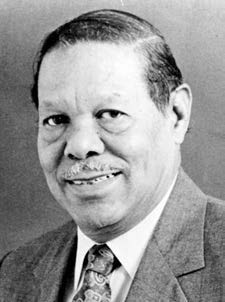
While many musicals were orchestrated by a principal orchestrator with one or more assistants or ghost orchestrators, Suskin (2009) reports that based on careful research, only 14 golden era musicals were orchestrated by a single person. For example, Suskin maintains that The Sound of Music was done solely by Robert Russell Bennett. Maestro Bennett made an influential splash from 1920 to 1975 and worked on some of Broadway’s most popular musicals as indicated in Table 1. Bennett orchestrated more than 300 Broadway musical scores of differing genres including musicals, symphonies, concertos, sonatas and operas. His musical arrangements for the 1955 film version of Oklahoma! earned him an Academy Award.

Learning Scenarios

Instrumental music students can benefit from analyzing the work of Broadway musical orchestrators and their creations. Various curricular approaches such as differentiation, habits of mind, multiple intelligences and learning styles can add flavor to lessons and assignments. Students can have input on which orchestrator or musicals they analyze and the way they present their findings (differentiation). The 16 habits of mind can be used to analyze the orchestrators’ work while the multiple intelligences, especially musical intelligence, can help shed light on the orchestrators’ musical work. Learning styles, especially VARK (Visual, Aural, Reading/Writing, Kinesthetic), can enable students to focus on orchestrators’ tasks.

ADVERTISEMENT

Expose students to the following learning scenarios in order for them to gain a deep understanding of musicals’ orchestrations. This includes online assignments using the internet and YouTube.

ADVERTISEMENT

Cast Albums – Students analyze one or more cast albums of a golden era musical by one or more orchestrators. They can describe the orchestrations of one or more songs on each album.

Full Published Vocal Scores – Students analyze the written score of one or more musicals considering time signatures, keys, lyrics, musical styles and any signature styles of a specific orchestrator.

Main Broadway Musical Orchestrators – Students explore the musicals of a specific orchestrator from Table 1 alone or with others.

Max Dreyfus and Chappell Music – Students explore the career of Max Dreyfus and his role within the Chappell Music Group. Which orchestrators in particular participated in Chappell and what were the logistics for providing the orchestrations for golden era Broadway musicals?
Research Students read books, articles, musical scores and the Internet to learn about the golden era Broadway musicals , especially the orchestrators. Suskin (2009) is an ideal resource.

Playing – Students learn to play one song from a golden era musical alone or with others. What do students notice about the orchestrations on cast recordings?

Analysis – Students analyze the music found in a complete golden era musical score. What components make up the score? What comprises overtures? What other features are common across scores?

Summary

The sound of Broadway musicals was accomplished by twelve orchestrators plus an array of assistants and ghost orchestrators. Instrumental music students can benefit from learning about these musicians and their twentieth century musicals.


Advertisement
TI:ME and Midwest Clinic

You may also like:

Will KuhnLearning Scenarios from 75 Years of Rodgers and Hammerstein Musicals Default ThumbnailRodgers and Hart at 100: WIth a Song in Their Hearts Oh, What a Beautiful Mornin’ Harman School Band (c) Rob W. DavidsonMusicals: The Multiple Intelligences Way Default ThumbnailMusical Study Guides Support: Curriculum, Instruction and Assessment
Tags: Musical Orchestrators of Broadway
ADVERTISEMENT
Previous Post

Colonel’s Book Club, Edition 6

Next Post

The New Normal: An Equitable Approach to Rebuilding School Music Programs

Next Post
Focus, Not Balance: How to Change Your Ensemble Sound to Ultra 3D

The New Normal: An Equitable Approach to Rebuilding School Music Programs

Please login to join discussion
ADVERTISEMENT
No Result
View All Result
  • Teachers’ Choice Awards
  • Subscribe Free!
    • Manage Subscription
  • Departments
    • Concert Band
    • Orchestra
      • String Section
    • Choral
    • Marching Band
    • Jazz
    • Modern Band/Popular Music
      • Mariachi
    • Theater
    • Editorial
      • Upclose
      • Advocacy
      • Commentary
      • Features
    • News
      • Headlines
      • New Products
    • Performance
      • Woodwinds
      • Percussion
      • Repertoire
      • Playing Tips
    • Technology
    • Travel/Festivals
      • Fundraising
  • Current Issue
    • Past Issues
  • Awards/Entries
    • Teachers’ Choice Awards
    • 50 Teachers Who Make a Difference
  • Support
  • Advertise
    • Email PR!

© 2005 - 2024 artistpro, LLC 7012 City Center Way, Suite 207 Fairview, Tennessee 37062 (800) 682-8114

Advertisement
Wenger Endur Music Stand