








In the July 2022 issue of SBO Magazine, I introduced the case for the advantage of making student leadership inclusive so that students can literally lead from any chair. When leadership is viewed as inspiring and encouraging others to achieve their full potential, and the first person we lead is ourselves, one does not need a title to be a leader. In Part 2, we will explore more concepts that can be shared and experienced by all your students.
A Vision For Positive Change
Leaders make a positive difference in the lives of others and this privilege should be shared with all students. Students can develop their leadership skills through focusing on the 4 C’s of upbeat leadership – character, competence, connection, and clarity.
 The foundation of leadership is our character. Character is not written in stone; it is something we develop and choose daily. Are we accountable? Do we follow through on what we say we are going to do? Do we inspire trust? Do we act with integrity even when no one is watching? A person with character (Care-Actor) acts with care. In addition to having a solid character, leaders need to be able to lead by example and role-model which is why competence (skills and abilities) are critical and why reaching higher and higher matters. A growth mindset, the belief our potential is unlimited, teaches us that through a variety of Strategies, appropriate Time, committed Effort, and a focus on the Process (S.T.E.P.), we can continually develop our competence. The expectation that all students can be role-models for each other, rather than just those with a leadership title, makes student leadership inclusive.
 Relating to others and creating a community of belonging is essential to being a successful leader which is why connection is the third C. Students can grow their connecting skills through practice; there is not just one way to connect. One way is to listen deeply when someone else is sharing their thoughts. Another is to communicate with inclusive language, such as “we, us, let’s, and together,” to emphasize community and belonging. Making eye contact, smiling, and facing the person we are speaking to makes a difference. Remember, where your heart goes, energy flows.
A leader also needs to have a clear vision of where they are headed which is why clarity is the fourth C. Music educators can teach the 4 C’s of Upbeat Leadership to all of their students and collaboratively work to create a vision together. When all students are given a voice and input for a vision for where the music program is headed, the students will feel valued and have more buy-in and enthusiasm for the work that needs to be done to make the vision a reality. Students can then collaborate within their sections to create goals and action steps that align with the vision. It is important all members of the section contribute and are an active part of the process. Making posters of the vision and goals and placing them on the walls is a great way to maintain focus on clarity.
 Just like in life and in music, our roles change throughout the day. At times, we will be called upon to lead and at other times, we need to just show up and be the best team-member we can be. Knowing how to lead effectively is important for all students to learn. Often, students lead how they were led, just like educators often teach the way they were taught, and parents parent the way they were parented. Learning the 5 Levels of Upbeat Leadership provides alternative methods of leading to all students. Level 1, the most common and the lowest level of leadership is simply telling others what to do. There are times when this is appropriate and necessary, but it should be delivered with a positive and supportive tone of voice and language. The next highest level of leadership, Level 2, is to invite others to do something. People respond better when they are asked rather than told to do something. Level 3 – do the task with peers – is where successful student leaders can and should spend most of their time because role-modeling and leading by example are such effective ways of leading and teaching. The adage, “show me, don’t tell me,” applies here. As we climb the levels of leadership, Level 4 – ask those you are leading for input – demonstrates value of what the other team-members and collaborators think and have to offer. Finally, Level 5 – empower others to lead – requires a high degree of trust to be able to delegate and build up and create new leaders.
Leadership In Rehearsals
We can teach leadership to our students outside of the regular class time or devote a few minutes each day in rehearsal to a leadership or character principle. You may also decide to devote more time through a Leadership Symposium after school or at lunch. We can also naturally embed and integrate leadership and character lessons into the rehearsal and practice of music. Here are some suggestions.
Listening to one another with respect is fundamental to being an excellent performer. We show respect to one another by playing with refined intonation, balance, and appropriate dynamics. We can apply this principle of respectful listening to how we listen and act when not engaged with music.
We grow in empathy and understanding through the study and playing of music with others. We learn we are not alone and that striving to match tone, pitch, and dynamics develops our ability to be empathetic outside of music.
The harmonies in music model how we can achieve harmony with others. It takes effort, work, and compromise to make a harmony sing, but it is worth the commitment.
Taking responsibility for learning our music for the good of the group demonstrates character. When we are accountable for our part, we model the importance of being accountable and build trust with the members of the ensemble.
Our roles in music shift just like they do in life. When we have the melody or a solo, it is time to lead, and when we have the harmony, it is time to serve and support.
Integrating leadership into class time naturally connects to social and emotional learning and empowers all students to recognize leadership is not about a position or title; it’s about how you choose to conduct yourself. Bringing your best attitude to every rehearsal, looking for ways to help, showing kindness and compassion, encouraging each other, proactively making ensemble members feel welcome, preparing for class, and having the courage to stand up for what is right are what matters.
Leadership requires a high level of self-awareness, emotional regulation, and the ability to choose one’s response and attitude. Teaching self-awareness and mindfulness to our ensembles is a pathway toward developing the skills of emotional-regulation and choosing one’s attitude. One strategy to introduce mindfulness into your rehearsals is through mindful breathing. Breathing is such an essential aspect to quality musical ensembles so teaching a slightly different type of breath will flow smoothly. It turns out our emotions are connected to our breath. Andrew Weil, M.D. writes in Spontaneous Happiness (p. 146), “It is much easier to learn to regulate the breath than to will negative moods to end.” By breathing low and deeply, students can slow their heart rate down and calm themselves before reacting without thinking. Also, focusing on something you are grateful for stimulates the neo-cortex and allows us to be more creative, solution-finders, and team-players – all qualities of an effective leader. Gratitude is contagious and when it becomes a centerpiece of the culture of a music program, where students naturally share their appreciation for one another, it lifts all aspects of the program. Consider creating a Gratitude Wall where students can share gratitude for one another with sticky notes. 
Here are two breaths to teach your ensembles that will incorporate gratitude and mindful breathing.
Gratitude Breath #1 Breathe in the nose for four counts while focusing on what you are grateful for and exhale out the mouth for eight counts what you want to get rid of – toxic energy, negativity, etc. Repeat 3 times. Closing eyes is optional.
Gratitude Breath #2 Breathe in the nose for 4 counts while focusing on what you are grateful for and exhale out the mouth what you want to give to the world or those around you – joy, love, peace, compassion, etc.
See my book, Upbeat! Mindset, Mindfulness, and Leadership in Music Education and Beyond, for more additional breathing techniques and methods for integrating mindfulness and leadership into rehearsals.
As teachers, we play a significant role in creating a spirit of inclusive leadership through our mindset, attitude, and actions. Provide opportunities for all students to share feedback, input, and opinions during rehearsal. Here are some ideas.
- Bring students to the front of the room to listen and offer suggestions to the ensemble.
- Mix the students up into chamber groups and have them rehearse on their own to develop leadership and teamwork.
- Provide mentoring opportunities for the more experienced students.
- Take time for students to connect and grow their communication skills.
- Even though you may have a student leadership team, share that everyone in the group is expected to lead by example.
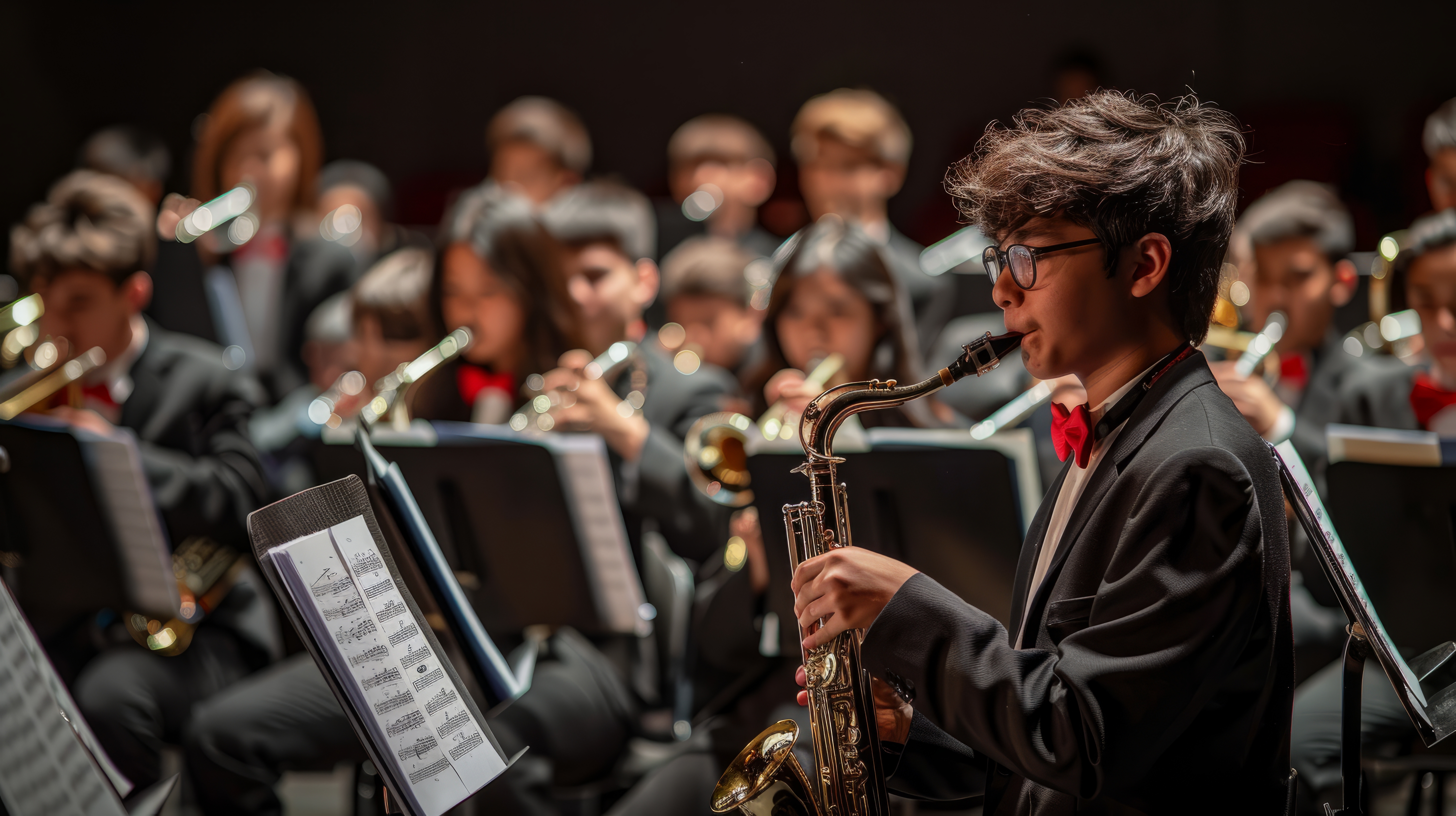
 Ultimately, the quality of student leadership in the room will be reflected in the quality of leadership we model day in and day out. This year, strive to create a culture where all students feel safe, encouraged, and confident to lead from any chair.
Dr. Matthew Arau, author of Upbeat! Mindset, Mindfulness, and Leadership in Music Education and Beyond and founder of Upbeat Global, is an associate professor of music and the chair of the music education department and symphonic band conductor at the Lawrence University Conservatory of Music in Appleton, Wisconsin.