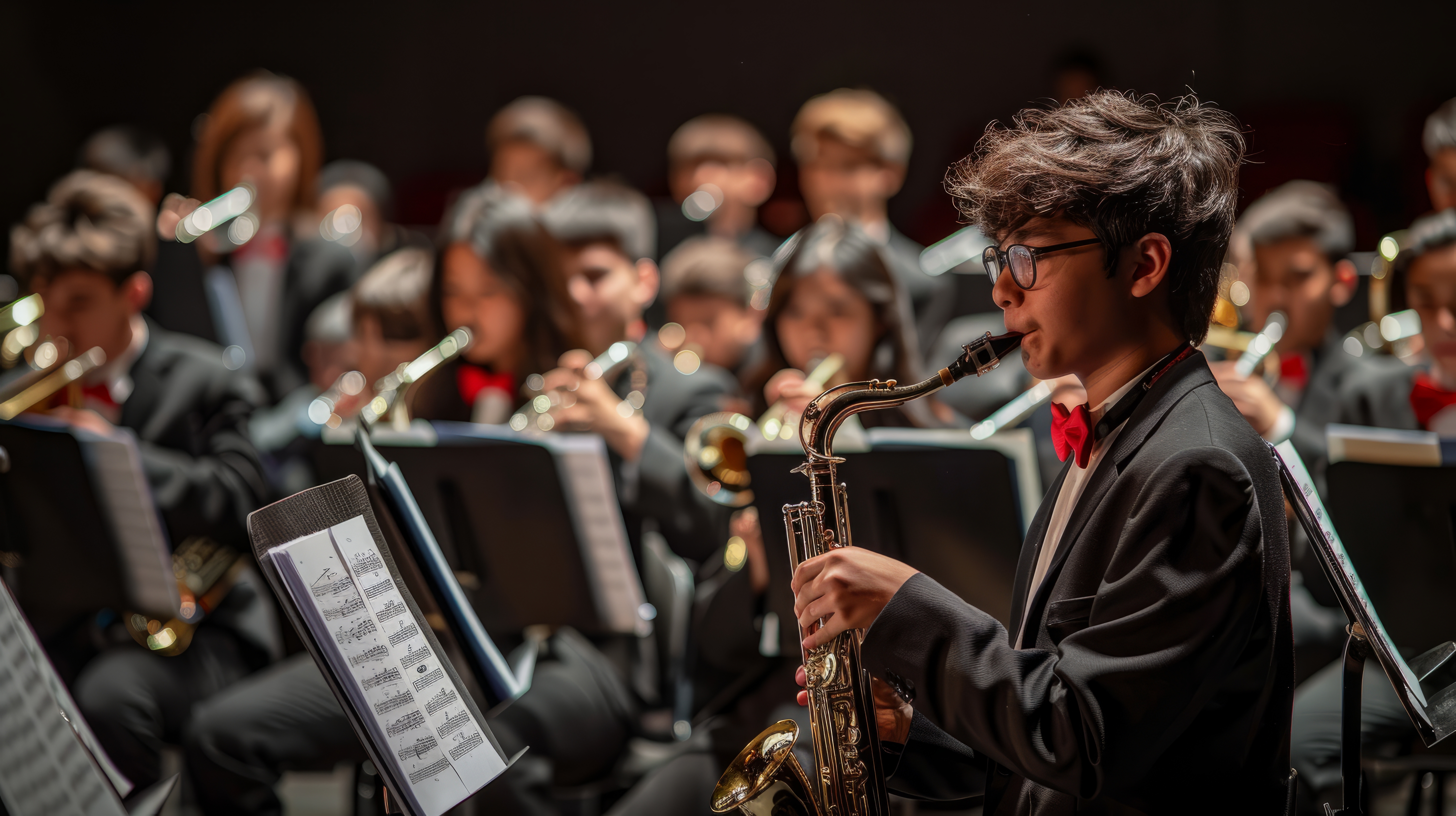








Selecting appropriate repertoire for smaller bands and orchestras will always be a challenge for ensemble directors. How do you challenge students who are advanced musicians while fostering growth for those who are developing? How do you ensure the ensemble sounds full when you can barely cover the parts? How do you build quality without appropriate quantity? I’ve taught and participated in many ensemble variations throughout my eighteen years as a band director. As ensemble directors, we’re all different and will take many varied approaches toward achieving success for our students.
Common challenges for small band and orchestra programs include instrumentation, varied levels of musicians within the ensemble, and limitations of resources and rehearsal time. Where to begin? Evaluate your ensemble. For rookie teachers, it is incredibly tempting to program all the favorites you played as an undergraduate. Maybe you have a few years of experience under your belt as you eye that well-developed, well-funded, and well-supported program that neighbors you. Better yet, you have that amazing band program with three concert bands, but your middle band never has good instrumentation because of your well-developed wind ensemble supported by a solid freshman band. Regardless, I urge you to understand your students as musicians and people, assess their level of musicianship, and make connections between students’ performance levels and needs within each section of the ensemble.
Well done! You’re evaluating your ensemble. Don’t forget about self-evaluation. You need to understand your own bias and limitations as a teacher. This form of assessment goes deeper than the professional development required by your school district. You know, the ones you’d rather paint lines on a practice field than attend. After being forced to be there, the guest or speaker admits the session really doesn’t provide much help for fine arts or elective teachers. You should assess your rehearsal ability as it relates to ensemble needs and challenges within the repertoire. Try not to make it about you, but instead, the quality experiences you are creating for your students. Find time to build knowledge of existing repertoire while exploring new literature by searching for the repertoire that best suits your ensemble and their “right now” needs.
Avoid the temptation to push a piece on your group because you had an out-of-body experience when you heard the All-State band or orchestra play it. Sometimes you’ll have opportunities for these works but be sure your ensemble is ready to handle them. Familiarize yourself with repertoire by relevance, grade level, instrumentation, and general challenges within the score, and ensure you have all the parts properly covered. Having a player on each part doesn’t mean parts are adequately covered. Many times, it’s better to have multiple students on a part to inspire confidence. It is possible to support developing students while challenging advanced students. How? Compare standard pieces that require much larger instrumentation with flexible versions of the same selection. As an arranger and composer, I’ve taken the time to start building authentic flexible ensemble arrangements that respect their original counterparts, without reducing the difficulty. There are flexible ensemble arrangements out there that are watered-down versions of the original, however, there are also flex works available that will challenge your advanced students, while providing growth opportunities for your younger students.
Consider moving past the idea of making sure every single part is covered with traditional instrumentation. Instead, focus on the process of making music. Flexible ensemble arrangements give those with limited instrumentations more adaptability and customization in covering parts with multiple performers. Stronger musicians can be models for weaker musicians needing a confidence boost. Many times, ensembles with limited instrumentation feel stuck playing the easier literature or believe flexible ensemble arrangements are geared toward younger ensembles. OR WORSE…they butcher harder literature, not because they don’t have players with appropriate skill levels, but because not ALL the musicians have the needed skills to play such challenging literature while being spread so thinly.
The good news is more authentic flexible literature is published each year for varying grade levels. Don’t feel the need to do what everyone else does if it doesn’t set your students up for success. You shouldn’t be intimidated by veteran teachers who think less of flexible literature because they feel these works diminish the “classic or standard literature.” Your situation is probably much different than theirs, especially if they have a larger program with abundant resources. Many programs are still feeling the aftereffects of the pandemic or may have always had small programs; however, flex arrangements give you more options to promote success. Yes, a flexible ensemble arrangement of a piece intended for a band or orchestra will sound different than the original. However, it can still sound full and respect all intentions of the original by maintaining the authenticity of the work.
Remember, you should strive to develop musicianship within the repertoire you are preparing. Flexible ensemble arrangements are merely another platform to cultivate student success when your instrumentation is limited.
JoeEmusic.com
Dr. Joseph Earp is the music/music industry chair and director of bands at Hinds Community College (Raymond, Mississippi) and a composer and arranger at Claude T. Smith Publications and RWS Music Company.