







• Latest
  • Trending
Beginning Tips for the Marimba

Beginning Tips for the Marimba

December 6, 2017

The Perfect Culmination: How One Violinist Found His Calling in the U.S. Air Force Strings

December 19, 2025

The Road Ahead for Music and Arts Ed: Keeping it Human

December 18, 2025
Dorico Music Notation Software

The Power of Small School Music Programs

December 17, 2025

Rehearsal AI: Transforming Artificial Intelligence into Authentic Musical Intelligence

December 15, 2025

Crafting a Creative Mindset for Band – Part 2

December 14, 2025

Headlines December 2025

December 10, 2025

Turn Rejection Into Success

December 10, 2025

Full Plate? Slow Down to Show Up

December 10, 2025

Tuning Ritual for Jazz Band

December 8, 2025

Why You Matter

December 8, 2025
2025 Teachers’ Choice Award Winners

2025 Teachers’ Choice Award Winners

December 1, 2025
Using Repair Initiatives as a Strategy for Increasing Community Engagement

Using Repair Initiatives as a Strategy for Increasing Community Engagement

November 29, 2025
Sunday, December 21, 2025
  • Contact
SBO+
TI:ME and Midwest Clinic
  • Subscribe Free!
    • Manage Subscription
  • Departments
    • Choral
    • String Section
      • String Section
    • Concert Band
    • Modern Band
      • Mariachi
    • Orchestra
    • Instruments
      • Woodwinds
        • Wind Talkers
      • Percussion
        • GoodVibes
      • Repertoire
      • Playing Tips
    • Marching Band
    • Resources
      • Fundraising
    • Jazz
    • Brass
    • General Music
    • Advocacy
      • NAfME Neighborhood
      • MAC Corner
      • MusicEd: Mentor Minute
    • Commentary
      • Bubbett’s Bookshelf
      • Leadership Tips
      • Perspective
      • InService
        • America’s Bandmasters
        • America’s Musicians
      • Tone Deaf Comics
    • Features
    • News
      • Headlines
  • Current Issue
    • Past Issues
  • Support
  • Awards/Entries
    • 50 Teachers Who Make a Difference
    • Teachers’ Choice Awards
  • Advertise
    • Email PR!
No Result
View All Result
  • Subscribe Free!
    • Manage Subscription
  • Departments
    • Choral
    • String Section
      • String Section
    • Concert Band
    • Modern Band
      • Mariachi
    • Orchestra
    • Instruments
      • Woodwinds
        • Wind Talkers
      • Percussion
        • GoodVibes
      • Repertoire
      • Playing Tips
    • Marching Band
    • Resources
      • Fundraising
    • Jazz
    • Brass
    • General Music
    • Advocacy
      • NAfME Neighborhood
      • MAC Corner
      • MusicEd: Mentor Minute
    • Commentary
      • Bubbett’s Bookshelf
      • Leadership Tips
      • Perspective
      • InService
        • America’s Bandmasters
        • America’s Musicians
      • Tone Deaf Comics
    • Features
    • News
      • Headlines
  • Current Issue
    • Past Issues
  • Support
  • Awards/Entries
    • 50 Teachers Who Make a Difference
    • Teachers’ Choice Awards
  • Advertise
    • Email PR!
No Result
View All Result
SBO+
No Result
View All Result
Romeo Music

Beginning Tips for the Marimba

byMike Lawson
December 6, 2017
in Percussion
0
Beginning Tips for the Marimba
Share on Facebook
ADVERTISEMENT

The marimba is not your ordinary instrument. Jumping right into the marimba can be very frustrating for a beginner.

If your student has never played the instrument, the sight of the wooden bars can be intimidating. I will provide some tips to make their beginning experience with the marimba easier and more enjoyable.

First of all, the pattern on a marimba is exactly the same as a piano. The white keys are on the bottom and the black keys (sharps and flats) are elevated above. The only difference is that the marimba keys are much bigger and they are struck with mallets rather than your fingers. I recommend looking at both the piano and the marimba, and have them observe that the patterns and layouts are exactly the same. For this reason, I also highly recommend that anyone interested in playing the marimba take basic piano lessons for a year. This will really help the transition and give them a head start in tackling the more exotic marimba.

ADVERTISEMENT

I also recommend starting on a basic set of bells and a xylophone before they play a marimba. The bells and xylophone are also the same as the marimba in terms of layout of the keys. Playing simple and familiar songs on either the xylophone or bells will help them become familiar with the instrument. I recommend songs that everyone knows, such as Christmas songs, so that their ear is already familiar with the melodies.

ADVERTISEMENT

Another obvious but extremely important aspect of preparing to play the marimba is to learn how to read music. Don’t let the student get frustrated if they are not immediately an expert at reading music. This takes years. Instead, focus on learning what the notes are on the treble and bass clef and memorizing them.

While students are learning basic music reading skills, let them have fun and enjoy themselves playing songs by ear on the marimba. Have them pick a very simple song or melody and figure it out just by using their ear. There are many pedagogy programs for children that are built on playing by ear and even basic singing. One of the more well-known methods is “Kodaly.” Singing a song before they play it on the marimba can be a very fun, effective and easy way to get started.

The other important aspect of learning how to play the marimba is discovering basic technique. Placing one mallet in each hand and squeezing your thumb and index finger on the mallet is called the “fulcrum.” This is the point of leverage on the marimba mallet and it should be three quarters of the way down from the mallet head on the wooden shaft.

Moving your hands up and down using your wrists as if you are waving goodbye is the proper motion for marimba technique. After striking the keys, allow the mallet to rebound. This is called the “piston stroke.” Allowing the mallets to rebound helps draw the sound out of the instrument. Always avoid the “nodes!” This is the part of the marimba bar right above the strings, and it produces a “dead” sound.

ADVERTISEMENT

Learning all of the major scales is also very important for the developing marimba player. Your students should memorize all the scales and play them using the proper technique described in the paragraph above. It is also perfectly fine to learn scales on a piano first. As a matter of fact, I think it is a great idea to do so because you will become more familiar with keyboard instruments in general.

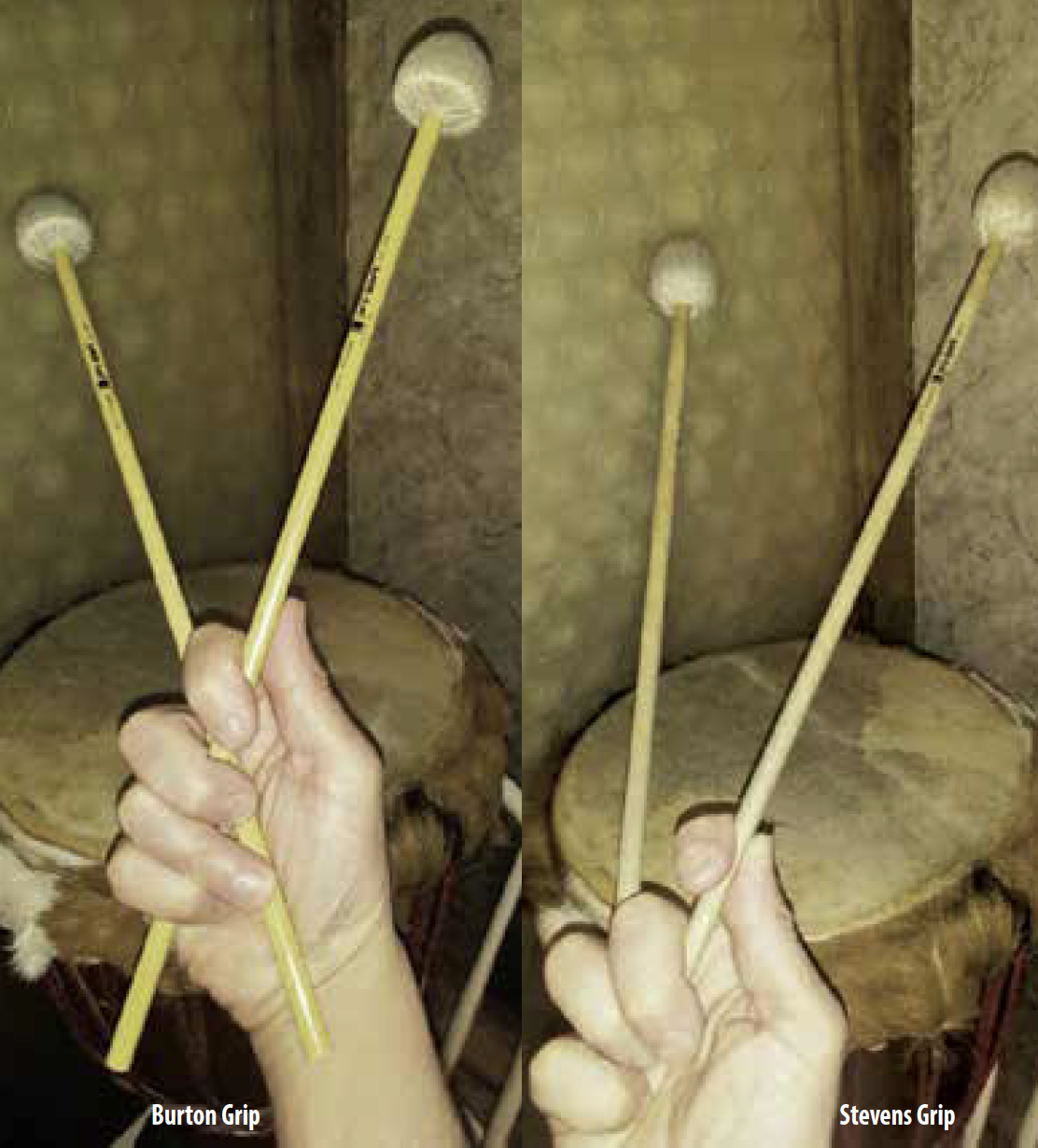
Many marimba players perform using four mallets. Do not let your students get frustrated if they can’t do this yet! It takes time to play with four mallets and they have to become adequate at playing two mallets first and foremost. When they are ready for four mallets, I recommend starting with the “Burton Grip” and play only block chords on the marimba. This would be the 1st, 3rd, 5th, and 1st notes on the major scale, or otherwise called the “major triad.”

Just remember to be very patient and do not let your students get frustrated as they learn the marimba. Even the greatest marimba masters on earth took many years to master the instrument! I highly recommend “Beginning Exercises and Studies for Two Mallets” by Ney Rosauro to get started.

In 2016, The Huffington Post called Kevin Lucas “the most talented percussionist since Lionel Hampton, Ginger Baker, and Tito Puente”. He has been nominated for 38 music industry awards for his Echoes in the Sand album, and he won the 2016 American Songwriting Awards. Lucas performed with the Madison Scouts Drum and Bugle Corps from 1992- 1994, and won the DCI Midwest Individuals in 1994 for keyboard percussion. He placed second in the United States for concert hall percussion at the Music Teachers National Association collegiate competition in 1997.

You may also like:

Promark SPYR: A New Mallet Line for a New Time Percussion Performance: Timpani Your Lucky 7: Helpful Tips for Recording Marimba The Good Vibes: Developing Four Mallet Technique How to Get a Great Sound From a Rosewood Marimba
ADVERTISEMENT
Previous Post

1000 Directors, 20 Years

Next Post

Making a Difference Through Education

Next Post
Making a Difference Through Education

Making a Difference Through Education

Please login to join discussion
Exclusive Content on artistpro.media
  • December 2025

    Articles | Digital Issue
  • November 2025

    Articles | Digital Issue
  • October 2025

    Articles | Digital Issue
  • September 2025

    Articles | Digital Issue
  • August 2025

    Articles | Digital Issue
© 2005 - 2025 artistpro, LLC
7012 City Center Way, Suite 207
Fairview, Tennessee 37062
(800) 682-8114

Wenger Endur Music Stand
No Result
View All Result
  • Subscribe Free!
    • Manage Subscription
  • Departments
    • Choral
    • String Section
      • String Section
    • Concert Band
    • Modern Band
      • Mariachi
    • Orchestra
    • Instruments
      • Woodwinds
      • Percussion
      • Repertoire
      • Playing Tips
    • Marching Band
    • Resources
      • Fundraising
    • Jazz
    • Brass
    • General Music
    • Advocacy
      • NAfME Neighborhood
      • MAC Corner
      • MusicEd: Mentor Minute
    • Commentary
      • Bubbett’s Bookshelf
      • Leadership Tips
      • Perspective
      • InService
      • Tone Deaf Comics
    • Features
    • News
      • Headlines
  • Current Issue
    • Past Issues
  • Support
  • Awards/Entries
    • 50 Teachers Who Make a Difference
    • Teachers’ Choice Awards
  • Advertise
    • Email PR!

© 2005 - 2024 artistpro, LLC 7012 City Center Way, Suite 207 Fairview, Tennessee 37062 (800) 682-8114