








By Keith W. Hodgson
SBO+: This is the first in a series of three articles. Enjoy!
INTRODUCTION:
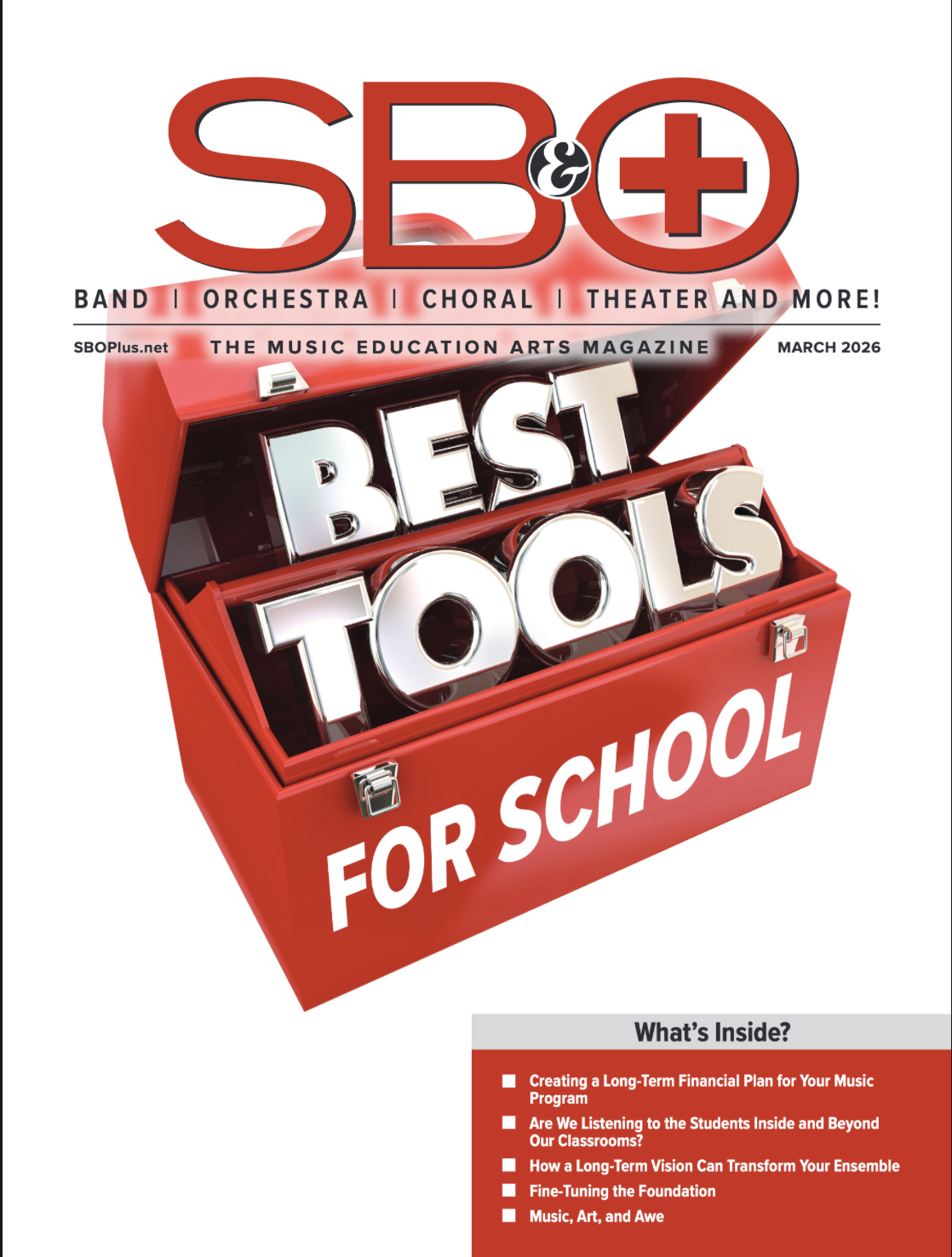
What tools do instrumental musicians need to be successful in rehearsal? What ‘best practice’ routines should directors establish with brass, woodwind, and percussion players? Why is it important to plan the approach sequentially and with creativity? The concepts I recommend are not only for high school bands but should be implemented in the early stages of instrumental habits and development as well as best practice habits for collegiate instrumentalist and adult community band musicians. It is critical to the success of developing musicians that directors are conscious about their logical and sequential needs.
INVOLVING PERCUSSIONISTS:
Consideration for percussionists is purposely being addressed first so they do not become an afterthought. Directors often begin a full band warm-up without giving thought to the percussion section. It is imperative to keep your percussionists involved, engaged, and challenged for many reasons. The most effective way to handle behavior and classroom management issues when it comes to the percussion section is to be proactive in your planning, intentional in your expectations, and purposeful in the development of training well-rounded percussionists with outstanding ensemble skills and positive habits.
Percussion students should continually expand and develop their skill set. Unlike the wind players in the band, percussionists must become fluent in reading both bass and treble clef as well as the unique percussion notation specific for individual instruments. The technique required to perform at a high level on each instrument can be practiced and demonstrated as a part of the rehearsal preparation time; however, it requires a creative and artful approach.
It is essential to organize job assignments or plan a scheduled rotation for the section to set-up and prepare all the equipment needed for the rehearsal. If organized and working collaboratively as a section, this can be accomplished quickly at the same time all wind players are getting set-up. I recommend all percussionists participate with the wind exercises on mallets instruments with yarn or soft rubber mallets for more blended sounds. Marimbas can serve three players, and vibraphone and xylophone can serve two. It is important to have fewer percussive sounds during full ensemble playing. Timpani should be utilized specifically to develop ear training and tuning skills. A planned rotation schedule can have one student each day assigned to working on their timpani technique. If you have a large section, the rotation schedule can have a couple students’ warm-up with rudiments on drum pads (not drums). Most importantly, do not let them become ‘the forgotten ones’ at the back the room.

FIRST THINGS FIRST FOR WINDS: LONG TONES!
Out of the case, wind musicians need to play long tones in their instruments before anything else. This establishes a set and steady embouchure; engages the lips with the vibrations needed to produce a sound on a mouthpiece and reed; and expands the lungs and open airway in consistent breath intake, output, and control. I recommend these long tones begin in the middle range for all instruments and not be rushed. Make a conscious effort to take in more air each time, expanding the lungs, and providing pitch and dynamic support. Instead of ‘mindlessly’ sustaining a note, have the students focus on their individual tone quality, a consistent centered ensemble pitch, and giving ‘forward direction’ and shape to each note. Finally, consider not measuring the long tones in a steady tempo or with the same number of counts per note. (And PLEASE do not use a metronome over the sound system for this) Instead, conduct the long tones at slow various tempos and in various meters. This will establish eye contact, engage students in responding to the conductor’s gestures, and will develop ensemble cohesiveness and awareness.
THE CIRCLE OF 4th’s:
Why use the Circle of Fourths? Unlike the Circle of 5th’s or only using ascending and descending scales, the Circle of 4th’s instills hearing dominant to tonic relationship, requires forward thinking, and engages musicians in active listening and ear training. For example, the ensemble begins on a union concert F, when directed, the ensemble moves together to a Bb. This movement of a perfect fourth will audibly establish the V-I relationship. Each subsequent movement will continue the V-I cadence in each key. Instead of ‘mindlessly’ moving to the next step of the scale, students are engaged in active decision-making as they consider each perfect fourth interval, octave choices, and pitch adjustments when ‘intoning’ chords. Finally, musicians will be naturally training their ‘inner-ear’ to hear the next tone before they play it. By engaging musicians in this process, musicians will instinctively focus their listening on center of pitch, tone quality, chordal resonance, and individual balance within the ensemble sound.
Author and Educator, Edward Lisk (1991) developed this fantastic Circle of Fourths visual model in his Creative Director: Alternative Rehearsal Techniques Series that has become one of most enjoyed and proven teaching tools in the band world.
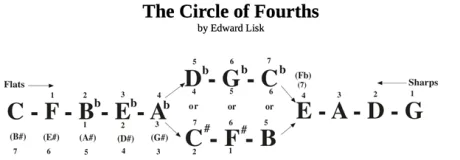
Consider using the Circle of Fourths consistently for unison long tones, scale practice logically moving to related keys, for three- and four-part chord ‘intoning,’ and for attack/ release and dynamic shaping exercises. Musicians will develop an ear for tuning and intonation, chordal relationships, blend and balance, and a higher level of musical understanding and engagement. Most importantly, be creative in designing exercises, progressions, and interactive communication between conductor and musicians. Be a creative director!