












The following article sample was reprinted from American String Teacher, vol 75, issue 1 with permission from ASTA and the author.
As an orchestra conductor and string music educator, I have come to appreciate the critical role that a well-adjusted bass section plays in creating a cohesive, powerful ensemble sound. Yet, all too often, conductors and educators struggle to make the necessary adjustments to fully integrate the unique qualities of the bass into the orchestral texture.
In this article, I will explore the key adjustments we need to consider when working with the bass section. By understanding and implementing these adjustments, we can help our bass sections become the true anchors of our orchestras, providing a rich foundation that enhances the overall ensemble sound.
Understanding the Unique Role of the Bass
Before we dive into specific adjustments, it is crucial to understand the unique role that the bass plays in the orchestral texture. Unlike the upper strings, which often carry melodic lines or intricate harmonies, the bass section primarily serves as the harmonic and rhythmic foundation of the ensemble. This foundational role requires a different approach to sound production, articulation, and ensemble integration.
The bass’s low register and slower string response mean that it can easily become muddy or indistinct if not properly balanced with the rest of the orchestra. On the flip side, a well-adjusted bass section can provide a sense of depth, power, and rhythmic drive that transforms the entire ensemble sound. Our goal as conductors is to make the adjustments necessary to achieve this ideal balance.
Acoustic Considerations and Placement
One of the first adjustments we need to consider is the physical placement of the bass section within the orchestra. While there is no strict rule for bass placement, several factors can significantly impact the projection and balance of the bass sound within the ensemble.
A crucial yet often overlooked aspect of bass placement is the orientation of the instruments’ f-holes. Ensuring that the f-holes are angled to face the audience can dramatically improve the projection of the bass sound into the hall and can make a significant difference in how well the bass section is heard and how it balances the rest of the orchestra.
Traditionally, basses are often placed on the far right of the orchestra. In many cases, though, especially when dealing with a smaller bass section, moving the basses to a more central position can greatly enhance their audibility and integration with the ensemble. One effective arrangement, particularly for string orchestras, is to place the basses in the center, behind the second violins and violas. This central placement allows the bass sound to project more evenly across the entire ensemble and into the audience.
When faced with a situation where the bass sound seems to disappear or lack presence, consider these adjustments:
- Move the basses to a more central position as discussed earlier.
- Work on dynamic balance, having other sections play slightly softer.
- Consider using acoustic enhancements like sound shells or risers.
Remember, the goal is to create a well-balanced ensemble sound where the crucial foundation provided by the basses is clearly audible without overpowering the other sections.
Regular communication with your bass players about what they are hearing and how comfortable they feel in different positions can provide valuable insights. By being flexible and willing to adjust bass placement based on your specific needs and circumstances, you can significantly improve the overall sound and balance of your orchestra, ensuring that the important contribution of the bass section is always heard and felt.
Bowing Technique Adjustments
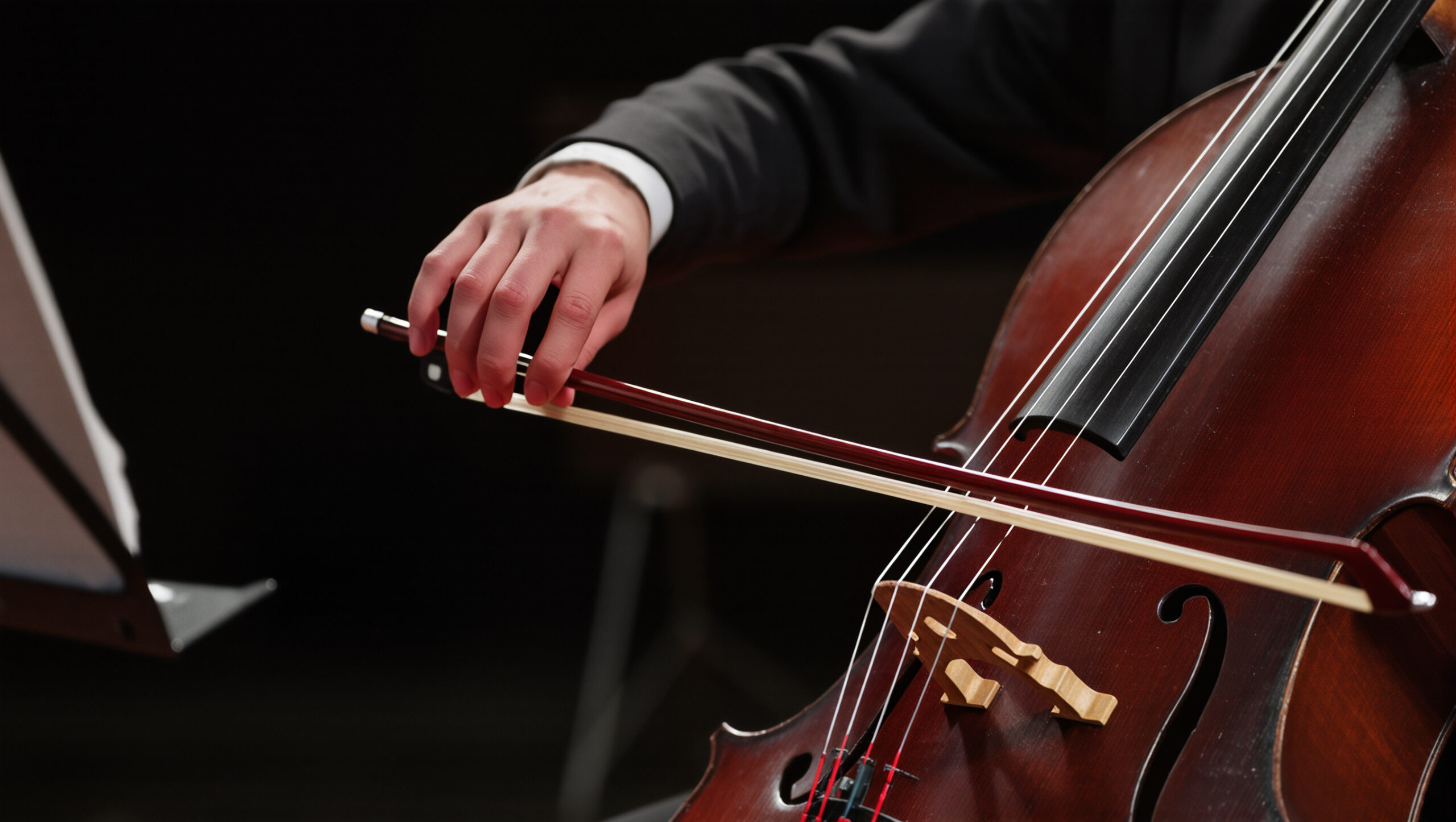
The unique physical characteristics of the double bass require specific adjustments to bowing technique. The longer, heavier bow and the thicker strings mean that bassists often need to approach bowing differently than their upper string colleagues.
One key adjustment is in the use of bow length. While we might ask violinists or violists to use full bow strokes for sustained notes or broad legato passages, this approach can be problematic for bassists. The longer bow length can lead to a loss of control and a less focused sound, especially in the lower registers. Instead, I often ask bassists to use about two-thirds of the amount of bow length I request from upper. For example, in a passage where the violins are using full bows, I might instruct the basses to use bow strokes from the middle to the tip or frog to middle.
Another important bowing adjustment relates to bow weight. The thicker strings of the bass require more time to speak fully, especially in the lower registers. This means that bassists often need to use slower bow speeds and more arm weight than their upper string colleagues to produce a full, resonant tone.
Read more about Articulation Adjustments, Dynamic Adjustments, Intonation and Harmonic Adjustments, Rhythmic Adjustments, Vibrato and Expressive Adjustments, Ensemble Integration Adjustments and more by accessing the full article at www.astastrings.org.