





The truth is, I was tricked into playing the bassoon.
Unlike a lot of classical musicians, I did not grow up in a musical family. In fact, the only reason I even joined band in sixth grade was because my friend was doing it. As a tweenager peer-pressured into an extracurricular I hadn’t the slightest idea about, I naturally selected the very coolest, edgiest instrument of the band – the drums, obviously – with visions of a rock n’ roll lifestyle à la the hometown-hero grunge bands I grew up listening to in Portland, Oregon.
When the perhaps-not-so-exciting reality of playing snare drum in a sixth-grade band hit me, I quickly pivoted to the second coolest and edgiest instrument of the band – the one no one else played. In my case, the bassoon.
Our band room had a poster of the woodwind instruments – flute, oboe, clarinet, saxophone, and bassoon. The first four I was familiar with from my fledgling musical journey. The “trick” came into play in the fact that all five were depicted on the poster as exactly equal in size, which as any experienced band musician knows, does not bear out in real life. Two days later, I found myself back in the band room being handed a monstrous-looking instrument taller than I was, staring up at the poster in confused betrayal. Trick accomplished.
Lucky for me, I loved playing the bassoon from the very first note I honked out that fateful day. Also lucky for me, I was weirdly good at it. And luckiest of all, I had a band director who noticed and cared enough to introduce me to the theretofore foreign world of classical music.
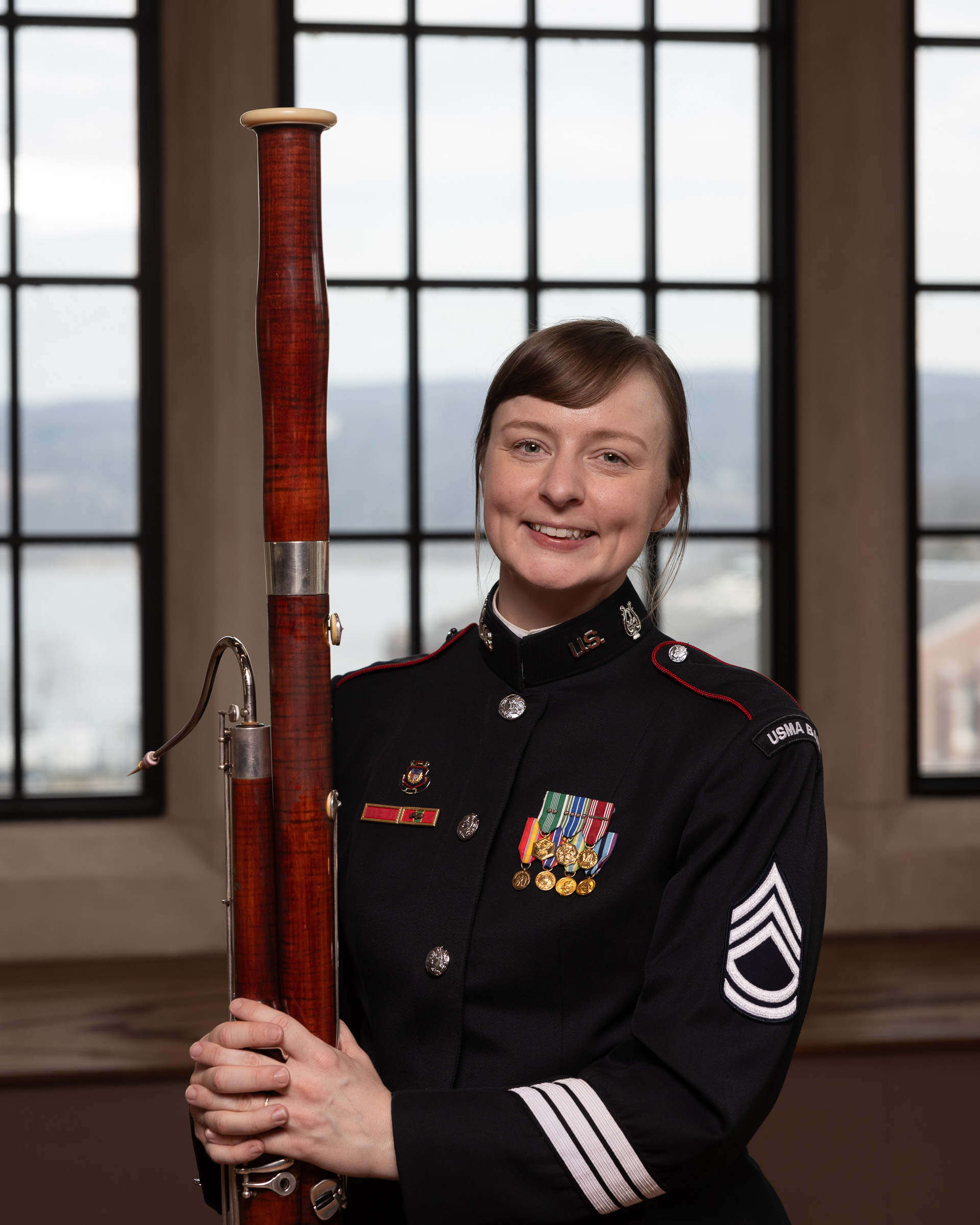
I’ve come a long way since then. Before I joined the West Point Band (one of the Army’s four Special Bands,” located at the U.S. Military Academy in West Point, New York), I completed undergrad at Rice University with renowned bassoon pedagogue Benjamin Kamins, and an Artist Diploma program with one year at the Colburn School Conservatory and one at Oberlin Conservatory. In retrospect, my conservatory training was an unexpected asset in preparing for an Army career, and a bit of a “boot camp” in its own right.
At Rice, I was expected to be hard-working, maintain a meticulous practice regimen, and settle for no less than mastery in my playing, three things I had previously been perfectly content not doing. Through hours in the practice room, I learned to notice, confront, and “work like hell” on my weaknesses, gaining the discipline, courage, and self-leadership that directly translated into my experience going through Army basic training (a requirement for anyone joining the Army Bands program).
However, those specific schools had no band programs themselves, so a military career was honestly not something I ever thought about. I had never even heard of a professional concert band until my sixth year of conservatory education, so I was perhaps not an obvious choice for the Army.
When I won the job, more than one friend assumed the “boot camp” I mentioned training for was a trendy exercise class in LA and not real U.S. Army Basic Training. Plus, I had my own private concerns, given that the most ferocious weapon I had yet wielded was a reed knife. But as I trudged through the hours of sweat and tears required to become an American Soldier, I found myself relying on my musical training for perseverance.
In my time as principal bassoon of the West Point Band, I’ve had the opportunity to perform in prestigious locales like Carnegie Hall and Lincoln Center, for presidents, prime ministers, and literal royalty, on national TV, on the fields of legendary sports franchises – including at the Yankees season opener, which sports fans have led me to believe is a very big deal! – and on the grounds where U.S. history was forged. (And one time with a hologram of Kelly Clarkson, not to brag). I’ve also gained a new perspective on American music history, experiencing it through the unique lens of military music.
It goes without saying that music was a huge part of my college experience, but before I joined the West Point Band, I didn’t realize that would also be true for the cadets (West Point students) here at the U.S. Military Academy.
The West Point Band’s mission is to support these students and our community by providing music for military ceremonies, public performances, and student events, and the school’s musical traditions date back to the time of the American Revolution. Each steppingstone on a cadet’s journey toward becoming an Army officer is accompanied by the same music that has been performed by the West Point Band since the school’s founding.
This year, as our country turns 250, it’s a particular honor to be a part of the lineage of Army musicians who have been serving at West Point since our nation’s founding, and to be performing alongside my friends, the fantastic musicians in the West Point Band. It’s a dream come true to make a living playing the bassoon, which wouldn’t have been possible without my music teachers – from sixth grade to nineteenth grade. To them, and to all the people who take the time to notice and care for their fellow humans: thank you for your service!