




 SBO: When considering who to ask to write about student leadership, Matthew Arau was at the top of my list. When I received his excellent article on the topic. I immediately felt it was worth two installments in SBO. Nearly all of us were raised in a director-centric environment. Think of your university band or orchestra director – was there any doubt who was in charge? However, to truly unlock the potential of every musical group, isn’t a musician-central model more appropriate? In the first installment, Dr. Arau challenges us to think of every student as a leader.
During the summer, many of us are looking ahead to this coming school year and looking for ways to inspire, invigorate, and ignite the passion of our students. Some of us have marching band or orchestra camps planned for the weeks before school to give our program a jump-start and set everyone up for a successful year. Your student leaders are excited and ready to kick off the fall season of music-making.
Many of us remember being a student leader in our band or orchestra and the impact that had on our decision to pursue music as a career. Student leaders often get valuable additional training through camps or leadership training, which is a good idea because being a student leader can be tough. Leading one’s peers during a time in life when most are just trying to figure out who they are and where they belong makes the challenge even greater.
I also recognize much of what makes a quality student leader is connected to self-improvement and personal growth. Most often when we think of student leadership, we envision a select group of students who have earned the title of leader either through their high level of achievement and performance or through an application and audition process. There is nothing wrong with this pathway to student leadership, and it still has many benefits for those students and music programs. However, when we empower all students to embody and exemplify the qualities of a leader, we make student leadership inclusive rather than potentially exclusive.
Imagine if every student in your ensembles could learn principles of leadership and team building, communication skills, goal setting, organization, accountability, and higher-level musicianship. Visualize every student looking for ways to lift others and support them. Picture your students sharing gratitude and encouragement with one another. Making this dream a reality begins with rethinking the traditional model of student leadership so every student can be included in the process of growth and development that in the past may have been reserved just for the students with a leadership title.
 What is Leadership?
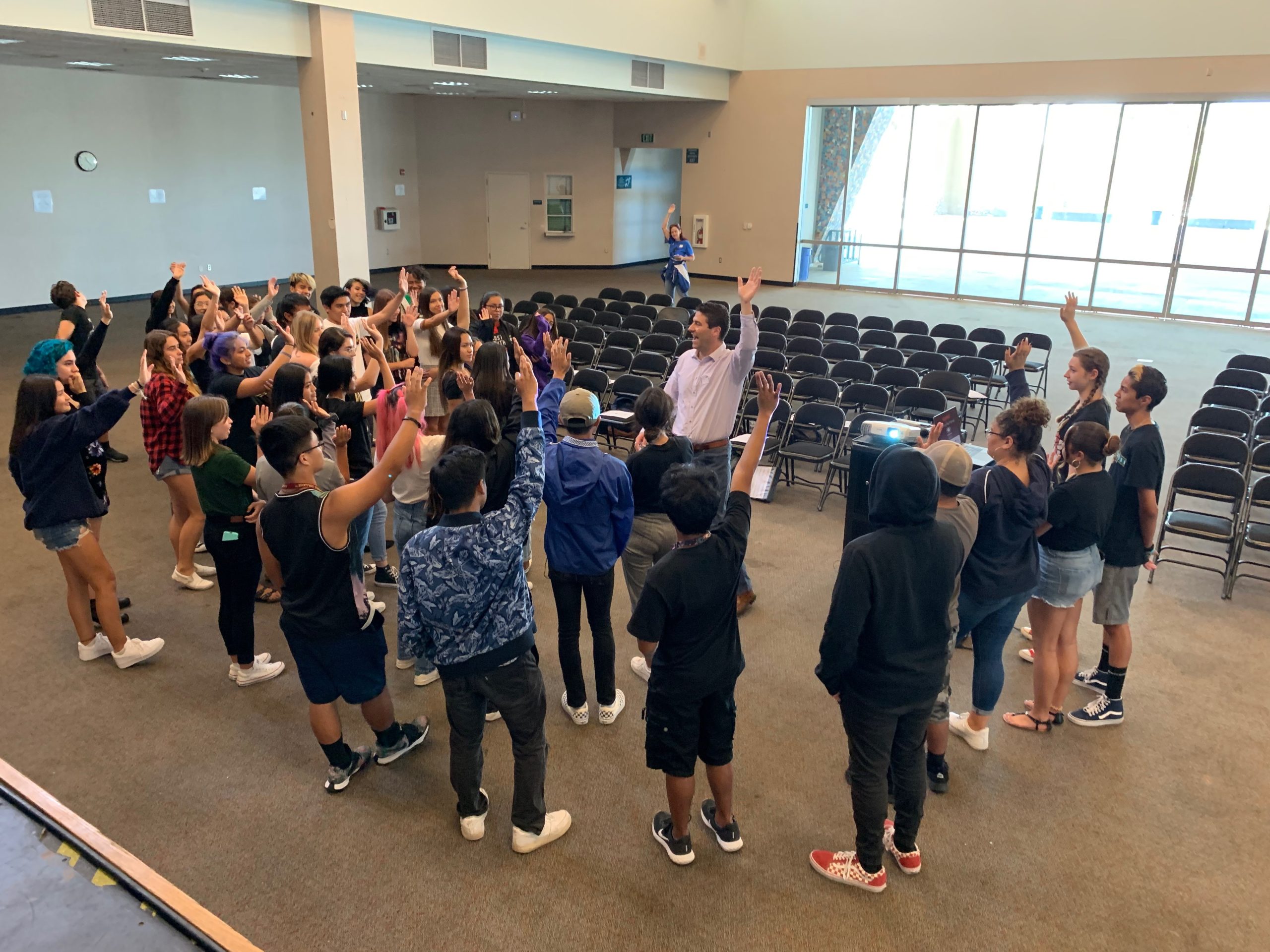
Years ago, in 2006, in collaboration with my high school band students at Loveland High School in Colorado, we started what became known as the Leadership Symposium. After teaching middle school for eight years at a middle school in Loveland, I moved over to the high school on the other side of town. I was following a highly successful band director and I encountered many challenges in my first year. I met resistance from many of the seniors in the band who adored the prior director, and the culture of the group, because of infighting amongst the students had become toxic. I knew something needed to change but other than waiting it out for the next few years I wasn’t sure what that next step needed to be.
Then, at the beginning of the second semester, two of my students, sophomore, and junior trombonists – Brad and Greg – walked into my office and asked if they could help with some of the cultural struggles in the band. I was so grateful to them for wanting to be a part of the solution. We decided to have an after-school meeting with everyone who was interested to talk about the direction of the band. To kick it off, I showed a DVD of Dr. Tim talking to high school students about the concept of servant leadership – leadership is for giving and helping others rather than for glory or power. My students at the time found this concept foreign and surprising, which naturally led to a vibrant discussion. I asked the students a series of questions, such as:
What kind of band do we want to create?
What new traditions do we want to start?
What are our values?
What is important to us as a band?
What does it mean to be a servant leader?
How do we define leadership?
What responsibilities does every individual in the band have to contribute to the whole?
The students were excited by the energy and direction of our first Leadership Symposium. At their request, we continued meeting weekly to develop leadership skills and collaboratively create the culture of our music program. After a few weeks, one of my students, a tuba player, said “What would it be like if every person on the marching band field was a leader?” We thought about it and decided it would depend on how we defined leadership. Certainly, we couldn’t have everyone giving orders to each other, but maybe, just maybe, there was a way to make this happen.
 Collaboratively, we came up with our own definition of leadership – Leadership is inspiring and encouraging others to achieve their full potential. To this day, I still share this definition with the many students and teachers I work with. Everyone needs encouragement at some time and the act of choosing to give encouragement is an act of leadership. You don’t need to be first chair to encourage someone. You don’t have to be the best musician to inspire someone. Showing up every day, trying hard, getting better, bringing your best attitude to a rehearsal is inspiring. You don’t have to have a title to inspire. Leadership is a choice, not a title. Lifting up, serving others, and bringing out the best in ourselves and those around us is leadership. We want our ensembles filled with this spirit of generosity, caring, and compassion. Leadership training should be presented and accessible to all students, not just the chosen few!
At the time, I chose to host after-school leadership training for all interested students in the band weekly whether or not they had a leadership title, so all could benefit from the personal growth and development integral to being a successful leader. We still had titled leaders in the marching band and the concert band, but through this inclusive process every student grew in their ability to choose their best attitude, be proactive, show compassion to others, reach higher as a musician, and to look for ways to support and serve others in the program. The quality of student leadership and the culture of the band program did not change overnight. I encountered initial resistance from some of the band staff who thought that I should not give so much responsibility and empowerment to “teen-agers.” Some students who were comfortable with the old way of leading from the top-down, questioned the concept of inclusive student leadership founded on principles of servant-leadership. Through being persistent and believing every student should have a voice and be heard and everyone should be able to benefit from lessons on leadership and personal growth, we were able to push through the initial challenges until this all-embracing model of inclusive leadership took root and became the standard and tradition.
Teaching leadership to everyone, not only makes important life skills accessible and equitable for all your students while creating a sense of community and belonging, it also raises every aspect of your music program. Leadership is the great lifter and just like the rising tide lifts all boats, student leadership for all raises the level of musicianship, culture, and joy. There are many ways to make inclusive leadership a tenet of your music program. Rather than a weekly leadership session, you may want to integrate a 5-minute leadership lesson or discussion once a week into your rehearsal schedule. You can also weave leadership principles into the actual rehearsal of music too. Next month’s article will get more into the specifics of the what and the how to make student leadership in your music program more inclusive.
Leadership Comes From Within
I want to leave you with one more idea. We often think of leadership in terms of leading others, but the most important person we lead is ourselves. For those of you who have read my book, Upbeat! Mindset, Mindfulness, and Leadership in Music Education and Beyond, or worked with me over the years know I teach what I call Upbeat Leadership. The word upbeat describes someone who is uplifting and positive, but it also describes the musical upbeat, specifically the preparatory beat a conductor gives prior to the first note of a piece of music. The conductor hears the sound in their head and shows the tone, timbre, articulation, dynamics, emotion, and tempo in the upbeat before the first sound is even made. Much like the conductor conducting an upbeat, we all can choose our upbeat in life. Our attitude is the upbeat to any situation. We choose our attitude. We choose our upbeat. Choosing one’s attitude, response, and actions is an act of leadership. It takes discipline and effort to choose to bring one’s best attitude to every rehearsal. It takes focused energy to choose a response that is supportive rather than confrontational. Being proactive and taking action to improve oneself or to help another are acts of leadership.
Taking responsibility for our self-talk, our attitude, our choices, and how we treat others is not always easy. It takes practice, but then again, doesn’t everything worth pursuing in life take effort? We come together in our ensembles to make music and community. If we can also grow collaboratively as leaders, we can help all our students reach higher, support each other, and become the best version of themselves.
Dr. Matthew Arau, author of Upbeat! Mindset, Mindfulness, and Leadership in Music Education and Beyond and founder of Upbeat Global, is an associate professor of music and the chair of the music education department at the Lawrence University Conservatory of Music in Appleton, Wisconsin. Reach him at www.upbeatglobal.com.
You may also like:
 2012 ’50 Directors Who Make a Difference’ Report
 SBO Presents The 19th Annual 50 Directors Who Make A Difference
 SBO Presents the 18th Annual 50 Directors Who Make A Difference Report
 SBO Presents the 21st Annual 50 Directors Who Make a Difference
 SBO Presents the 20th Annual 50 Directors Who Make a Difference