







By Michael Griffin
Energy!
The conductor must have more energy than the choir. Choirs respond to an energetic and passionate conductor. Particularly with young choirs, a fast-paced rehearsal captures the choristers’ attention, reducing boredom and unwelcome behaviour.
Model!
As conductors, we should constantly model posture, correct mouth shape, and breath preparation. Choirs learn best from mostly nonverbal rehearsing strategies. Sometimes it is useful to model what you do not like the choir to copy, followed by the correct way, so they can feel and hear the distinction.
New teachers are susceptible to over-teaching. They fall into the trap of providing excess verbal instruction at the expense of offering a simple model. Sometimes it is better for teachers to keep words to a minimum and allow students to copy. Searching for improved tennis training methods, Tim Gallwey did exactly this. He experimented with nonverbal instruction, asking his pupils to observe and copy him. His experiment was an unqualified success. Gallwey states, “I was beginning to learn what all good pros and students of tennis must learn—that images are better than words, showing better than telling, too much instruction worse than none.”
Goals!
Always be working towards a goal. Setting goals is a great way to fill the mind with positive thoughts. Goals are motivational; goals inspire! At the very first rehearsal, inform the choir of their next performance. Goal setting is essential to progress. Learning choral music requires the conductor to plan and to set short and long-term goals. People sometimes fail to succeed because their goal setting is unrealistic. Lack of purpose results in lack of excellence. Lack of proficiency is a primary reason people give up music, and this is often related to poor goal setting.
Plan!
Plan rehearsals thoroughly. Know what the focus of each rehearsal will be. If you have lunchtime rehearsals, arrange to have an earlier lesson available for preparation in order not to be rushed when starting rehearsal. Sing through all choir parts prior to rehearsal so as to anticipate difficulties. Understand every aspect of the work: rhythmic cells, pronunciation and emphasis, breathing, dynamics, tempo and tenuto, range (compass) of each part and the meaning of the text. You should know the whole work before you teach any of it.
“Most people do not plan to fail, they fail to plan.” – John Beckley
Excellence!
Demand a high level of excellence. If you let anything “go” or write it off as a “slip,” the choir will either think that a) you are incapable, b) you don’t think they’re capable, or c) you are slack. In any case, you and the choir lose. The benefits of excellence are numerous. We feel proudest of the achievements for which we have worked hardest and reflecting on past success gives us a perpetual sense of satisfaction and hope. New success allows us to view our self-image in a fresh and more favourable light, and new possibilities emerge as excellence begets excellence.
Repertoire!
When selecting repertoire, you must know the vocal range of your choir sections, and preferably each member’s range also. Have this written down and accessible. Repertoire should be challenging and artistically satisfying. Choristers like repertoire that fully absorbs their present skills, resulting in personal musical growth. Hence, it is better to know only a few songs and do them really well, than to sing a large number indifferently. Conductors often underestimate the capability and potential of their choir. If repertoire does not progress in complexity, choirs can lose interest. Making progress is the greatest motivator. Understanding motivation is paramount.
Resist the temptation to pander to the repertoire requests and popular taste of choristers. Songs that are the fashion of the day seldom yield choral reward because their success relies upon non-musical factors such as style, fashion and sex-appeal. These features attempt to compensate for simplistic harmony and mediocre lyrics. Your choir and audience might never appreciate the wonders of serious choral music if you neglect to educate them. Good repertoire includes songs that are word-rich, and vowel-rich, because it’s on the long vowels of a song that harmonies really express themselves. Select varied repertoire that expresses a range of emotions between contemplation and exhilaration.
“I don’t aspire to be in fashion, because what’s in fashion goes out of fashion.” – Betty Churcher
Memorise!
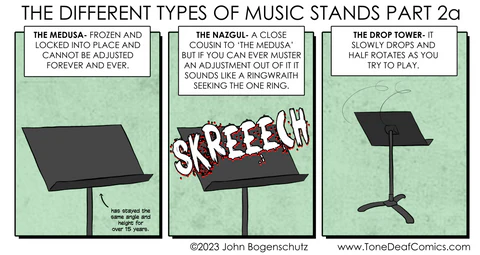
As much as possible the choir should learn music to be performed from memory. Performing from memory indicates a deep understanding and internalization of the music. Memorisation allows musicians to develop their expressive ideas more freely and to communicate those ideas more effectively. One study found that an audience with musical training rated memorised performances higher in terms of communicative ability. An audience feels a greater connection when notation and music stands are omitted, and when distractions such as page turning are not an issue. Besides other benefits of memory learning, this will enable choristers to focus on your conducting. Don’t assume that the music is too long or too difficult for memory work. Learning to sing from memory requires an understanding of musical-chunking processes, which is greatly assisted by understanding the score.
Get out more!
If you need to become familiar with choral excellence, attend school and community concerts and rehearsals. Good examples are often our best teachers. Invite an experienced conductor to take your choir, creating an opportunity for professional development.
Practice!
Learn the fundamentals of learning. A book such as Learning Strategies for Musical Success! discusses the essentials of repetition, chunking, slow practice, and distributed learning.
Enjoy!
Have a sense of humour in rehearsal. Show your passion, emotion and personality. Reveal your love of music and pause to appreciate the moments of beauty discovered within each piece.
An excerpt from Bumblebee! Rounds & Warm-ups for Choirs by Michael Griffin. Available at J.W. Pepper and Amazon. Griffin is a music educator from Australia. His website is Professional-Development.com.au