






• Latest
  • Trending
Playing with Intent: The Missing Link Between Practice and Confidence

Playing with Intent: The Missing Link Between Practice and Confidence

January 27, 2026
Ten Commandments of Programming

Ten Commandments of Programming

June 15, 2026
Closing This Chapter and Looking to the Next in Our Ensemble Programs

Closing This Chapter and Looking to the Next in Our Ensemble Programs

June 12, 2026
ADVERTISEMENT
Teaching Theater Kids about the Importance of Correct Phrasing

Teaching Theater Kids about the Importance of Correct Phrasing

June 11, 2026
An Inspiring Story

An Inspiring Story

June 9, 2026
Headlines

Headlines

June 8, 2026
Add This to Your Bucket List

Add This to Your Bucket List

June 4, 2026
Breathe – Then Reinvent Yourself

Breathe – Then Reinvent Yourself

June 1, 2026
New Products

New Products

May 28, 2026
Translating Emotion to Expression: Five Strategies to Try

Translating Emotion to Expression: Five Strategies to Try

May 27, 2026
Sidney Harth’s Bowings for the Beethoven Symphonies 

Sidney Harth’s Bowings for the Beethoven Symphonies 

May 29, 2026
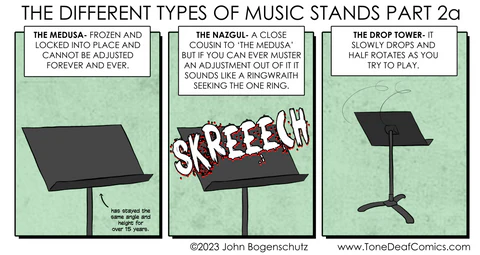
The Different Type of Music Stands – Part 2a

The Different Type of Music Stands – Part 2a

May 22, 2026

If You Can’t Beat ‘Em, Join ‘Em

May 21, 2026
Monday, June 15, 2026
  • Contact
SBO+
  • Advertise
  • Subscribe Free!
    • Manage Subscription
  • Departments
    • Choral
    • String Section
      • String Section
    • Concert Band
    • Modern Band
      • Mariachi
    • Orchestra
    • Instruments
      • Woodwinds
        • Wind Talkers
      • Percussion
        • GoodVibes
      • Repertoire
      • Playing Tips
    • Marching Band
    • Resources
      • Fundraising
    • Jazz
    • Brass
    • General Music
    • Advocacy
      • NAfME Neighborhood
      • MAC Corner
      • MusicEd: Mentor Minute
    • Commentary
      • Bubbett’s Bookshelf
      • Leadership Tips
      • Perspective
      • InService
        • America’s Bandmasters
        • America’s Musicians
      • Tone Deaf Comics
    • Features
    • News
      • Headlines
  • Current Issue
    • Past Issues
  • Support
  • Awards/Entries
    • 50 Music Teachers who Make a Difference
    • Teachers’ Choice Awards Nominations
No Result
View All Result
  • Advertise
  • Subscribe Free!
    • Manage Subscription
  • Departments
    • Choral
    • String Section
      • String Section
    • Concert Band
    • Modern Band
      • Mariachi
    • Orchestra
    • Instruments
      • Woodwinds
        • Wind Talkers
      • Percussion
        • GoodVibes
      • Repertoire
      • Playing Tips
    • Marching Band
    • Resources
      • Fundraising
    • Jazz
    • Brass
    • General Music
    • Advocacy
      • NAfME Neighborhood
      • MAC Corner
      • MusicEd: Mentor Minute
    • Commentary
      • Bubbett’s Bookshelf
      • Leadership Tips
      • Perspective
      • InService
        • America’s Bandmasters
        • America’s Musicians
      • Tone Deaf Comics
    • Features
    • News
      • Headlines
  • Current Issue
    • Past Issues
  • Support
  • Awards/Entries
    • 50 Music Teachers who Make a Difference
    • Teachers’ Choice Awards Nominations
No Result
View All Result
SBO+
No Result
View All Result

Playing with Intent: The Missing Link Between Practice and Confidence

January 27, 2026
bySBO+ Contributor
in Jazz Band, January 2026
Share on Facebook
Sweetwater
ADVERTISEMENT
By SBO+ Staff

By Jeff Antoniuk, Artistic Director of JazzWire.net


We spend endless hours in the practice room—working on scales, transcribing solos, and memorizing chord changes. But when we finally get on stage or sit down at a jam session, something is often missing: intent.

Intent might sound abstract, but it’s one of the most concrete and transformative elements of performance. Intent leads directly to confidence, and confidence is the foundation of every compelling solo. But where does confidence come from? From experience. And experience, in our world, comes from time invested—in other words, practice.

So, how can we make “playing with intent” something we practice, not just talk about?

What It Means to Play with Intent

In our weekly video lessons inside JazzWire.net, I often trade fours for our students. I’ll record myself playing for four measures with a track and then leave four measures of space. They record their responses. When they upload their takes our faculty listens and comments.

Guitarist and JazzWire faculty member Steve Herberman recently commented to a student regarding his fours with me: “It sounds like Jeff is playing with more intention than you are. I get the sense that a split second before he plays something, he already knows what it’s going to be.”

That’s the essence of it. Professionals have a sound in their head before they play. That sound might be a tone, a phrase, a rhythm—something specific and pre-heard. Maybe it’s Dexter Gordon’s big, round tone or Cannonball Adderley’s joyful cry. But before a note leaves the horn, the musician already hears it. Intent is the bridge between those two worlds—the sound in our imagination and the sound that comes out of the instrument.

The Three Pillars: Brain, Fingers, and Ears

  1.   Brain – The Conceptual Side

Our brain gives us structures that shape intention. Practicing scales in thirds, working on triad pairs, or using the classic bebop “shape” (arpeggio up, scale down) are “brain-first” exercises. They organize our thinking so part of what we play is predetermined. That’s the key: when you decide to use a triad pair or a scale in thirds, you’ve already made several choices about which notes to play. This structure narrows your focus, reduces uncertainty, and allows intention to take over. You stop wandering and start declaring something.

  1.   Fingers – The Physical Connection

Once your brain has an idea, your fingers (or hands, or slide, or sticks) need to execute it. This is where “muscle memory” comes in—not literal memory, but coordination developed through repetition. When your fingers know a phrase or shape, your brain can focus on expression instead of survival. That’s when intent starts to sound like confidence. Technical work isn’t about speed or flash—it’s about creating a reliable bridge between thought and sound. The faster that bridge works, the stronger your musical intention feels to both you and your listeners.

  1.   Ears – The Source of Sound and Imagination

Finally, we arrive at the ears—the most vital part of the chain. Playing with intent begins with hearing something before it happens. If I imagine Dexter Gordon’s tone before I play, my next note immediately sounds more grounded. The sound in my mind changes the sound that emerges from my horn.

Some musicians hear rhythms first. Others hear shapes, melodies, or grooves. There’s no wrong answer, but it’s powerful to know which kind of listener you are. For me, rhythm comes first. If I hear a rhythmic phrase in my head, all I need to do is fill it with notes. That’s the magic of intent—some of your solo is already done for you. If you’ve already chosen the rhythm or tone, you’re not starting from a blank slate. You’re building from something alive.

Practicing Intent

Understanding intent is one thing—practicing it is another. Here are a few ways to bring this concept into your daily playing:

  1. Hear Something Before You Play.

Before each phrase, take a split second to imagine something—a rhythm, a tone, a shape—and then play it like you heard it. Even simple ideas strengthen your intent “muscle.”

  1. Trade Fours with Purpose.

Record yourself trading fours with a backing track. Each time it’s your turn, decide in advance what your first idea will be—a rhythm, a motive, even a single note.

  1. Slow Down, Leave Space and Phrase Better.

Great orators—Morgan Freeman, Ian McKellen—use pacing and silence to project confidence. Try doing the same musically. Slower, deliberate phrasing (four measures, specifically) lets intention shine through.

  1. Use Predetermined Shapes.

Pick one concept—triad pairs, bebop shapes, or scales in thirds—and build around it. The structure gives improvising direction and authority.

  1. Model a Sound.

Choose one tone model—Miles, Cannonball, Wes Montgomery—and channel that sound as you begin. You’ll be amazed at how your phrasing and note choices adapt.

Intent and the Path to Confidence

When you play with intent, you stop guessing. Each phrase, each silence, each note is a decision—and decisions build confidence.

That’s what professionals do. They’ve built up so many sounds, shapes, and ideas that every phrase carries purpose. But you don’t have to wait until you’re a pro to play that way. Novices can do this too.

Even if you only know one thing—a rhythm, a lick, a pattern—you can start from there. Begin each solo by choosing one idea you already own and build around it. When you do that—when every note has purpose—you’ll sound more confident, more musical, and more you.

That’s the heart of jazz: the sound of someone meaning every note they play.

JazzEdNet.org

You may also like:

An Introduction to Researching Music and the Brain Percussion Performance: The Drum Stroke 50 Music Teachers Who Make a Difference The More Musical Percussionist SBO Presents the 20th Annual 50 Directors Who Make a Difference
Rovner
ADVERTISEMENT
ADVERTISEMENT

POPULAR STORY

  • New Products December 2025

    New Products December 2025

    1791 shares
    Share 716 Tweet 448
  • Holiday Gift Guide for Music Businesses: Tools to Boost Engagement and Growth

    1713 shares
    Share 685 Tweet 428
  • 50 Music Teachers Who Make a Difference

    1416 shares
    Share 566 Tweet 354
  • When Selecting New Choral Music, Choose Success

    1299 shares
    Share 520 Tweet 325
  • 2025 Teachers’ Choice Award Winners

    1186 shares
    Share 474 Tweet 297
ADVERTISEMENT

SchoolMusic.Travel

No articles found.
Next Post
Tone deaf – Decibel Scale

Tone deaf - Decibel Scale

  • June 2026

    Articles | Digital Issue
  • May 2026

    Articles | Digital Issue
  • April 2026

    Articles | Digital Issue
  • March 2026

    Articles | Digital Issue
  • February 2026

    Articles | Digital Issue
© 2005 - 2026 artistpro, LLC
7012 City Center Way, Suite 207
Fairview, Tennessee 37062
(800) 682-8114

No Result
View All Result
  • Advertise
  • Subscribe Free!
    • Manage Subscription
  • Departments
    • Choral
    • String Section
      • String Section
    • Concert Band
    • Modern Band
      • Mariachi
    • Orchestra
    • Instruments
      • Woodwinds
      • Percussion
      • Repertoire
      • Playing Tips
    • Marching Band
    • Resources
      • Fundraising
    • Jazz
    • Brass
    • General Music
    • Advocacy
      • NAfME Neighborhood
      • MAC Corner
      • MusicEd: Mentor Minute
    • Commentary
      • Bubbett’s Bookshelf
      • Leadership Tips
      • Perspective
      • InService
      • Tone Deaf Comics
    • Features
    • News
      • Headlines
  • Current Issue
    • Past Issues
  • Support
  • Awards/Entries
    • 50 Music Teachers who Make a Difference
    • Teachers’ Choice Awards Nominations

© 2005 - 2024 artistpro, LLC 7012 City Center Way, Suite 207 Fairview, Tennessee 37062 (800) 682-8114

Wenger Transcend Ad
Wenger Transcend Ad