





When I was in elementary school (in 1970s Memphis, Tennessee), I loved music class. My teacher was Ms. Della Comella. She would travel from classroom to classroom with her autoharp in hand. As a budding young guitar player, I quickly realized the autoharp was used in the same manner as guitar—as an instrument to accompany singing. Later, Ms. Comella would let me accompany singing at school with my guitar. “Hum and Strum” gave me a place to be at school in those days.
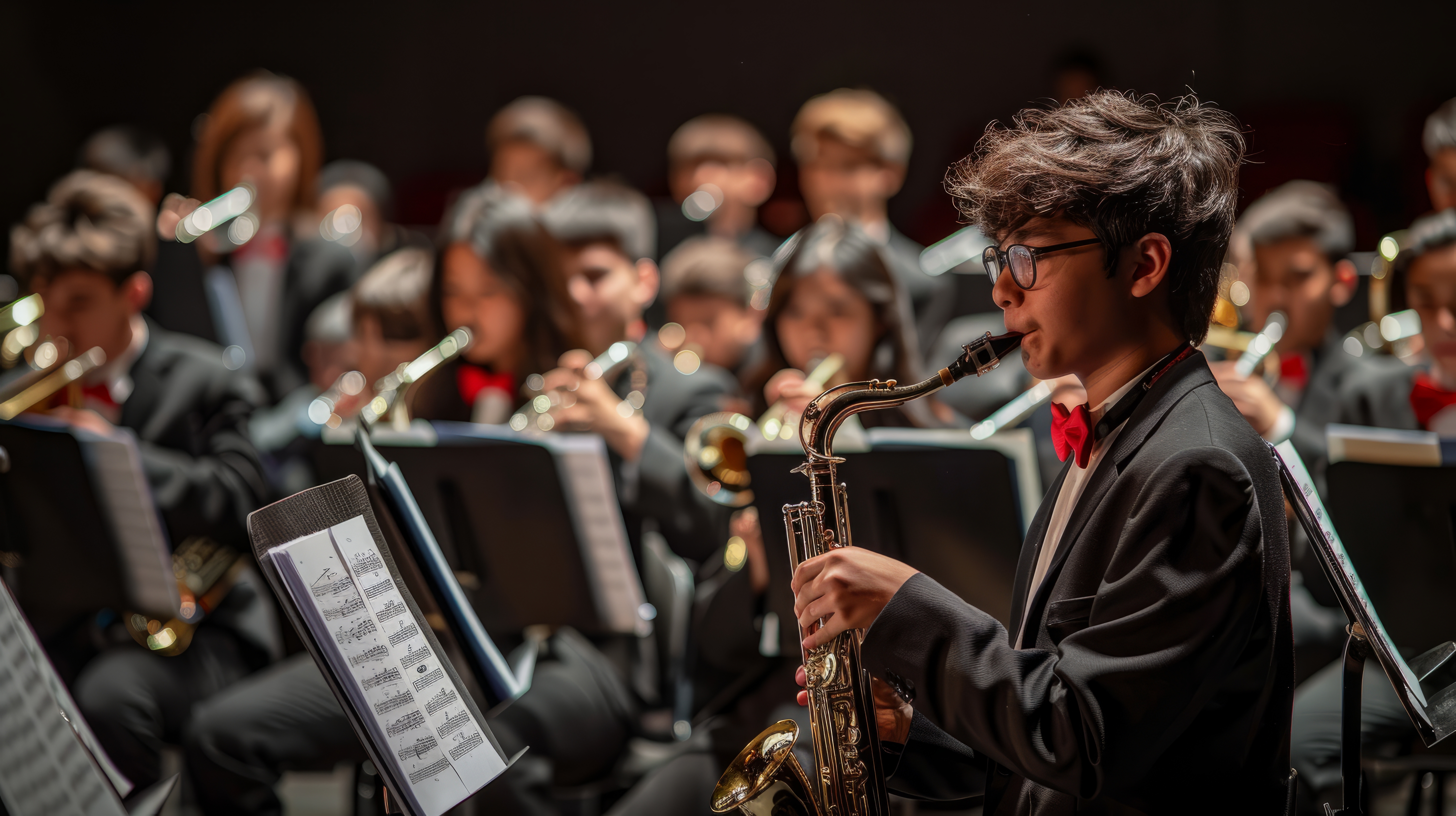
Guitar was not offered at my middle or high school; the only musical options were choir and band. I played saxophone in band, but my passion for guitar had to continue outside of school with private lessons. It was clear to me that I was only in band because there was no other musical outlet for me at school.
While in high school, I gave private lessons to some of my friends and even one of my teachers. I really enjoyed sharing what I was learning with others. When I went to college, I inquired about majoring in music education but was told this was not possible with guitar as my primary instrument. So, I pursued my degrees in performance.
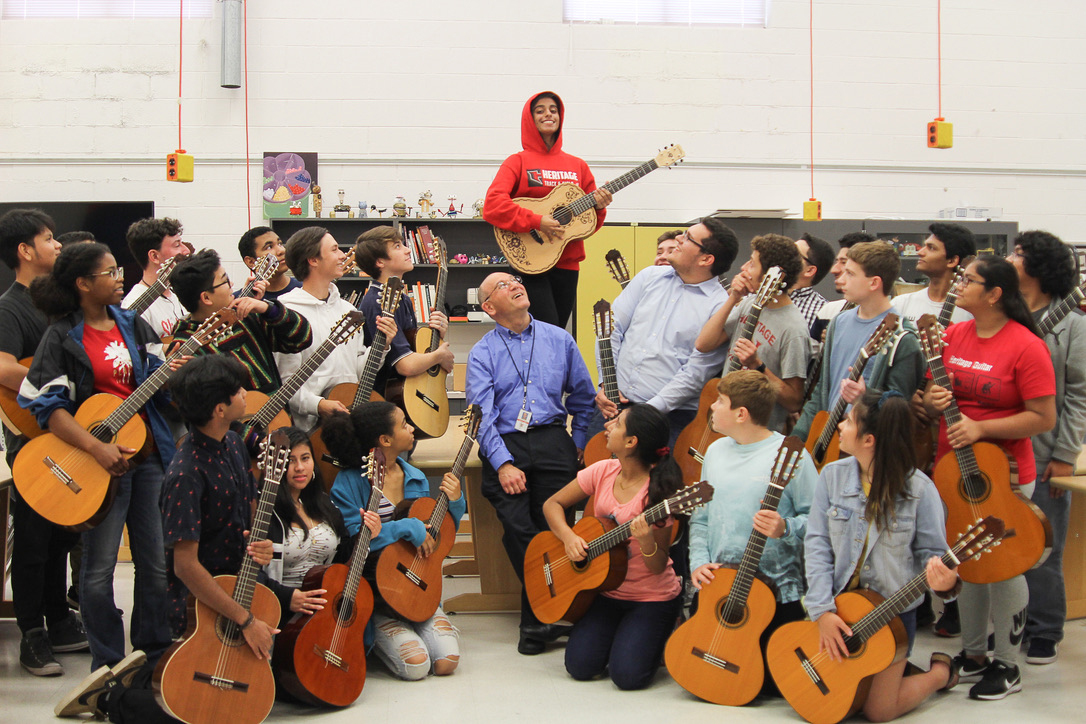
In the early 1990s, I met John Graham, who was teaching guitar at Lake Braddock Secondary School in Fairfax County, Virginia. This is where I first witnessed guitar being taught in a school at the same level as band, orchestra, and choir. John’s classes were not just “Hum and Strum,” they were literacy based, with an emphasis on ensemble music. John introduced me to a world where guitar students could have similar opportunities to their musical peers. John and his students were my inspiration to teach in the school system.
I have now been teaching for Loudoun County Public Schools in Virginia for over two decades. During this time, I have watched the growth of guitar education at the local, state, and national levels. In my current role as the chair of the NAfME Council for Guitar Education, I have learned much about the state of guitar education in the United States.
Guitar education is growing substantially across the nation. Based on NAfME membership records, there are 5,520 members who indicated they are teaching guitar. This is just shy of the number of those who indicated they are teaching piano classes. Since 2010, ten All-State programs have been created (in Arizona, Florida, Kentucky, Louisiana, Nevada, New Hampshire, New Mexico, Rhode Island, South Carolina, and Virginia). There is no doubt this growth will continue.
While the growth of guitar education has forward momentum, there are obstacles that need to be addressed. Based on a 2023 survey conducted by the NAfME Guitar Council, a few of these are:
- Less than 40% of those teaching guitar in K–12 classrooms consider themselves guitar specialists.
- Less than 26% of those teaching guitar in K–12 classrooms had any guitar pedagogy in their preservice training.
- More than 80% of those teaching guitar in K–12 classrooms state their preservice training did not adequately prepare them for a career in guitar education.
- Over 70% of those teaching guitar in K–12 classrooms do not participate in guitar-related professional development.
The NAfME Council for Guitar Education and the Guitar Foundation of America have teamed up to advocate and address associated issues in higher education. The immediate needs, however, are to support music educators in the classroom. So, if you are a non-guitarist who finds yourself teaching guitar, you should consider taking advantage of the various resources from the NAfME Council for Guitar Education.
- The council holds two Town Hall events each academic year, with one in the fall and the other in the spring. Keep an eye out for event postings. These events are also recorded and available in the NAfME Academy.
- If you are unsure how to pace your instruction, check out the Council’s “Best Practices” document. It is a four-year guide.
- The council has started publishing a video series based on the “Best Practices” document. These short videos are designed to help you navigate various aspects of teaching guitar.
- The NAfME Academy also has recordings of several guitar-related webinars.
- Other Guitar Council resources are posted on the NAfME website.
When I was in elementary school, Ms. Comella allowed me to use my guitar in class, but that was an exception to the rule. The growth of guitar education has created the opportunity for many more students to create music in guitar classes around the country. If you are a non-guitarist guitar educator, please know you can make a huge difference in the lives of your students. The first step is to care, then go from there.