








The following article sample was reprinted from American String Teacher, vol 74, issue 4 with permission from ASTA and the author.
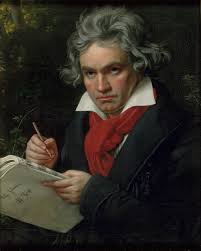
Beethoven . . . the name alone holds reverence and admiration for musicians, composers, and concertgoers that are not musicians. Although he is not the father of the symphony, Ludwig van Beethoven is synonymous with the large composition form. It is not hard to imagine that composers after Beethoven wanted to make a similar impact in the symphonic medium. Beethoven not only advanced large-scale composition techniques but is often credited with initiating the Romantic Period, particularly with his Third Symphony, “Eroica” (Bruner 2023). Various editions of his compositions do not include bowings. It has been well documented that Beethoven’s copyists, at times, would make mistakes with the parts before it was sent to the engraver; the editor Jonathan Del Mar was quoted about the mistakes made by the copyists using bowings that were not originally Beethoven’s, to the point of significant errors in the Symphony No. 9, the “Choral” symphony, The String Quartet No. 15 in A minor, Op. 132, and Symphony No. 5 (Classic FM n.d.).
Before the Internet and Urtext versions of the Beethoven Symphonies were available, concertmaster and conductor Sidney Harth bowed, notated, and corrected a complete string set for each of the Beethoven Symphonies upon the suggestion of his student and friend Stanley Nosal. Nosal has recently donated the bowed parts to the American String Teachers Association for the membership to use as a resource. Nosal also included his accompanying document, A Maestro Edits the String Sets of Beethoven’s Nine Symphonies, that contains more detailed information about the parts. Both resources can be found on the ASTA (2024) website and accessed as a member benefit.
In our analysis of the collection, we also observed the following, listed below by Symphony.
- Symphony No. 1: This is the most thoroughly and meticulously notated symphony, but all parts must be consulted as the instructions are not consistently clear across the parts.
- Symphony No. 2: While the notes are located on the back of the first violin part, many of the footnote numbers are missing in the first violin part but can be found in the second violin, viola, and cello/bass parts. While it appears that a seventh footnote is missing in the fourth movement in measure 372, studying the cello/bass part, it seems that the number “7” must refer to the number of notes in the measure. In footnote 6, he states “in cases such as this [8th notes leading into whole notes], it is a good expectant [sic] to leave out the last note so the next strong impetus can be set firmly.” In other words, leave out the last eighth note of measure 371 to ensure a strong downbeat on measure 372. Another interpretation is that the seventh footnote was omitted.
- Symphony No. 3: The first two footnotes only refer to a bowing and a string preference in the first movement. The third footnote refers to one note in the second movement. There are notes written in the margins of all four parts.
- Symphony No. 4: There are several notes in the margins and articulation suggestions within the parts. The three footnotes address parts of the bow and bowings.
- Symphony No. 5: Harth notes that many of the double down-bows are “historically traditional” but changes the second note to an up bow because the “editor sees no reason for the double down-bows.” The singular footnote refers to the third movement, second violin, measures 336-366.
- Symphony No. 6: Most of the notes in the margins address articulation.
- Symphony No. 7: In the first violin part the Roman numeral IV clearly refers to the first note of the measure. In the second movement, Allegretto, the bowing suggested at letter B depends on the musical interpretation of the conductor. The second violin part is not as clearly marked at letter A and should refer to the first violin or viola parts with similar material for bowing clarity. “Sempre staccato” should be interpreted as “spiccato.”
- Symphony No. 8: Harth makes note of a printing mistake in the second violin part, first movement, measure 52 where the notation is incorrect for the time signature (there are not enough beats).
- Symphony No. 9: This symphony is the least marked (both bowings and articulations) and has the fewest comments, though there are some suggestions within the music.
- Measure numbers were added by the authors for Symphonies 3, 4, 6, and 9 as the Kalmus editions only printed the rehearsal letters.
Read more by accessing the full article at www.astastrings.org.
ASTA Members can take advantage of this incredible resource and more: https://www.astastrings.org/site/resource-library. Become an ASTA member TODAY! https://www.astastrings.org/site/membership