







Understanding the school budget process
 Well, it is that time of year again – time to prepare for the school budget process. What’s that, you say? It’s too late? The process is almost over?
No, no – I am not talking about the upcoming year (2014/2015); I am talking about the next year – the 2015/2016 school year! You see, in order to be really effective impacting the budget process, you (and your supporters) need to be preparing now.
Here is why:
Typically, most music educators, along with other advocates and concerned parents, are shocked when they learn that music programs are in jeopardy due to budget cutbacks. Well, they shouldn’t be! Those who are surprised by budget reductions are either unaware of or have not tracked the year-long process that school districts go through to build a budget.
As part of our responsibility as concerned citizens, parents, and educators, we need to monitor what is happening. By becoming involved early in the cycle, the budget outcome will never be a surprise. By monitoring the following this seven-step process you may ensure there are no surprises.
To be effective the best strategy is to start early – like now. Here are my seven steps to managing the school budget process.
Phase One
Defining Your Budgetary Needs (Summer)
Over the course of the summer, you will have more time to reflect on what items will be needed to support the program: music, equipment, personnel, schedule, and so on. When compiling this list, it is important to include items into categories for your own use. What are the items that are the “must-haves?” These are the items that are critical to the success of your program. What are your “nice to haves?” These are the items that would enhance your program but would not hurt the program of you did not have them right away. For every item, be sure to prepare a justification statement in support of the need for the request. Having this list (and the justifications) will help you when choices may need to be made.
Phase Two
Request for Information (October)
In most school districts, the budget process is initialed by a top executive – usually the superintendent or the chief business officer. Under that person’s leadership, district employees assigned to budget development spend the first part of the school year gathering data, selecting from available options, and making recommendations. Their final product is then submitted to the school board. They make amendments as deemed necessary, and then approve a final budget.
Two documents may be available during this early portion of the seven-step budget process. The first would be the “assumption statement,” which will set forth key assumptions and formulas to be used in the development of the budget. The second document is a calendar of major steps in their budget process. If the school district doesn’t actually publish a calendar, it’s likely that the person in charge is able to provide information on the budget timetable.
The request for information phase is when the school administrator (principal, arts supervisor, department lead) comes to you and requests your budget needs for the upcoming year. Often times this starts almost as quickly as the new school year settles in – usually late September or October.
During this process, the first clues about the financial condition of the school/district come to light:
“We are requesting all departments make do with the same budget as last year.” This means they are expecting flat funding.
“Let me know everything you need.” This means they are genuinely interested in what you need to support the program. It does not mean you will get it.
“Expect no more than a two-percent increase.” This statement usually means they are trying to manage to an across-the-board increase established by the business administrator (with input from the Board of Education).
“We have to come up with some cost reductions. We need five percent from each department.” This one is the most dangerous. This statement indicates there is some type of financial problem in the offing and what starts out as an innocent request is actually an indicator of problems in the future. This statement should set off warning signs for you and your supporters.
It needs to be pointed out that during this early part of the budget process, people monitoring the budget plan should make it their business to get to know board members, and learn how they stand on music and arts education. At least one parent should attend every board meeting (it does not always need to be the same parent). Also, board members should be invited to attend concerts and other events during the year. They should be introduced at these events and asked to make comments when appropriate. They shouldn’t be strangers.
Phase Three
Submission of Requests and Budget Development
In Phase Three, all departments submit their requests. These are then rolled up to the business administrator. Based on how the budget looks once all of the requests are made, the business administrator will work with the individual departments to attempt to bring the budget requests in line. This is when someone may come back to you and say, “We do not have the funding to support all your requests. Could you let us know your priorities?” This is where your list comes into play. Being proactive will help you be able to quickly provide the requested information.
Phase Four
Budget Summary to the Board (January)
Usually the board will have a first discussion about the budget status and guidelines as well as how the process is moving forward. Often, this will happen as a conversation in a public meeting. It is important to note that this is now three months into the budget process.
This is also when any potential problems that were not uncovered during the budget development phase will come to light.
Phase Five
Public Release of Draft Budget (February/March)
Next in the process is the presentation of the budget or summary of its major elements to the school board and the public release of the budget. Again, this usually occurs relatively late in the budget process. And, typically, there are only a few weeks to read it, ask questions, and propose changes.
Phase Six
Public Hearings (April)
The school board holds one or more public hearings, soliciting citizen comments on the budget – once it’s gone this far, it’s difficult to make changes.
Phase Seven
Formal Budget Adoption (April)
The final step is budget adoption and funding approval. After the public hearings, the board adopts a budget with whatever amendments it deems necessary. Oftentimes, the public hearing and formal budget vote occur at the same meeting.
By following these seven steps you will be able to be proactive in managing the process, engage your parents and supporters to assist in monitoring the process, and be able to react as circumstances change. What you accomplish during the early phases will have a direct impact on how successful you are with the later phases.
The most important takeaway is: you have to be involved! Get crackin’!
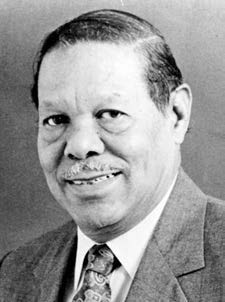
Note: This article is an adaptation and modernization based on an original article from 1990 by my mentor and renowned music education advocate, the late Karl Bruhn. It is as relevant today as it was then. Thanks Karl!
 Robert B. Morrison is the founder of Quadrant Arts Education Research, an arts education research and intelligence organization. In addition to other related pursuits in the field of arts education advocacy, Morrison has helped create, found, and run Music for All, the VH1 Save The Music Foundation, and, along with Richard Dreyfuss and the late Michael Kaman, the Mr. Holland’s Opus Foundation. He may be reached directly at bobm@artsedresearch.org.