








 Originally intended as a “grand finale” to the series of articles addressing orchestral etiquette(s), I am finally able to present this piece. I am pleased to present these thoughts and observations from noted experts in the field.
Representing Conductors/Affiliations:
Youth Orchestras: Mrs. Nikki Wilson, (B.M., M.M. violinist and strings teacher, past conductor of Ethos String Ensembles)
Collegiate Ensembles: Mrs. Deidre Vaughn Emerson (cellist, teacher, conductor, professor of cello at Tennessee State University, Nashville State Community College, Martin Methodist College, and former conductor of the Tennessee State University Orchestra)
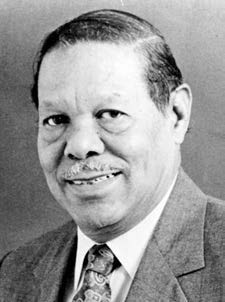
Professional Level: Dr. Jordan Tang, (B.A.; M.S.M.; M.M.; Ph.D.; music director laureate, Jackson Symphony Orchestra, Tennessee, and Paducah Symphony Orchestra, Kentucky; associate conductor, Charlotte Symphony Orchestra, North Carolina)
The Education/The Educator
Each participating conductor was given a set of questions specific to their experience. Something I had not considered during the planning of this article is that two of the three categories are primarily institutions of education, while in the professional environment, an orchestra is its own purpose. I tried to organize accordingly; some of the included dialogues surfaced independently (with or without suggestion).
Dr. Jordan Tang on preparing for professional success: “Schools should help students prepare for professional life. Most schools do not really worry or care about life after auditions and on the job. If there is any guidance in professional life in orchestras, it would probably come from the students’ private teachers on a personal basis. Some guidance might come from a classroom situation in a course about repertoire, but I have a hunch the subject matter of professional living is not particularly emphasized.”
Most educators will at some point find themselves in the position of managing an ensemble comprised of either the very young and/or the very inexperienced. Such groups present difficulties for the conductor as they must assist students with instrumental proficiency, appropriate rehearsal behavior, and provide a successfully positive ensemble learning environment. They must prepare their charges for the requirements of the next level of ensemble while managing vast differences of need and abilities within their group.
Nikki Wilson on teaching etiquette in young ensembles: “I believe the most important aspect of etiquette that I can teach my students at this stage in their development concerns how to respond when their stand partner makes a mistake. It is not the responsibility of other players to try to verbally correct others’ mistakes. That responsibility lies with the conductor only. Leading by example is the perfect way to address mistakes around you. Usually students can self-correct when exposed to the proper way to play a certain passage of music. Under no circumstances should another student be allowed to correct their stand partner. Allowing that to happen is an excellent way to engender strife and ill-will among young musicians. The most effective way to teach this is to be direct about the correction process. If I ever encounter a student being verbally critical of another student, I immediately have them stop and I explain why that is inappropriate.”
I am curious about the degree of overlap found, expected, and needed in simultaneous training of musicians (privately and in an ensemble). What tools are acquired from orchestral experience? How do instructors’ direct students’ focus towards skills provided in lessons? This is a potentially massive topic which deserves some attention.
Threads of Etiquette
Musical Environments: all three conductors agreed that an effective way to educate students in proper orchestral etiquette and skill(s) is by example (from more experienced players who lead and teach intuitively).
There is a general consensus that the conductor’s’ job as an educator is to encourage the development of skills in the areas of:
• critical listening
• critical thinking
• problem solving
• general ensemble awareness
• empathy
• the ability to absorb one’s environment
The responses unanimously indicated the necessity of a healthy balance between orchestral assistance and other foci in private lessons.
The Importance of Conduct
I was intrigued by the many common threads found throughout the answers of three very different individuals with diverse experiences from which to write. I was struck by repeated attention and overall tone in which the importance of conducting one’s self well was discussed.
Dr. Jordan Tang on conduct:
What behavior do you most wish everyone agreed upon as acceptable orchestral conduct that is currently inconsistent? “Respect to and from both the conductor and the musicians; humbleness among all; no showing of ego, no showing off… no belittling of others, whether musical or social; general personal courtesy.”
Do you feel your musicians are adequately prepared for the professional environment?
“Assuming that the higher caliber of the orchestra equates to a higher caliber of players, there naturally exists the higher potential of bigger egos. Thus, exists various levels of potential conflict, tension, jealousy, respect and disrespect between the musicians and the conductor and amongst the musicians themselves. Often the quality of the working environment comes down to character and personality traits of everyone involved, both individually and collectively.”
Deidre Vaughn Emerson on conduct:
What behavior do you most wish everyone agreed upon as acceptable orchestral conduct that is currently inconsistent?
“Treat all players with dignity and respect. Answer questions politely and with kindness. You and your actions build an orchestra, a team, a community. Nothing will ever grow from ugliness and disdain but resentment. An orchestra is never about one person. Respect. Respect to the conductor, respect to the ensemble, respect to your section members and stand partners and respect to the composer and tradition. All of this requires accountability of action, practice, and attention.”
Unique Perspectives
Although some of the most interesting points made by these professionals are unique to their experience, they strike upon profound realities in which I think most musicians can identify.
Nikki Wilson: “The ability level of the student is not the determining factor in better rehearsal etiquette. A student who has been studying an instrument for many years but has never played in any type of group will be just as unaware of the rules as a student who has only been playing for a year. The determining factor deciding which students will have better etiquette is the amount of experience they have in ensemble playing. Only by spending time in ensembles can any player learn proper rules of etiquette, whether they are an advanced student or a beginner.”
Dr. Jordan Tang: “The older group has probably lived long enough to be experienced, mellow, understanding, and afraid to be forced to retire. The youngest group probably is not experienced enough, too timid to misbehave, too easily picked out if signs of misbehavior showed and thus potentially not re-hirable. The middle age group is probably the group one depends on for consistency of service and quality of life in an orchestra, and thus the most vocal and temperamental. Uneasiness and dissatisfaction perhaps comes from those who want to step up to bigger and higher level professional orchestras but could not, and thus stuck in the same place.”
Deidre Vaughn Emerson: “As students age, they become sober and determined. They have a greater sense that the world is a very big place, but at the same time, usually hold on to their resolve to make it. However, the concept of “making it” might morph. One might start to ask themselves what is truly considered a success. What really is the “dream?” Every day I myself realize that in truth, I am living my dream. It might not be as wonderful or rosy as it seemed from the outside, but I have a sense of appreciation and contentment. In short: it is important to strive for excellence, yet also important to find contentment in place.”
Jennifer began studying violin at age three. After receiving a B.M. in violin performance and a M.A. from Middle Tennessee State University, she returned to university to properly study the viola. Currently, Jennifer performs with the Jackson Symphony Orchestra, the Murfreesboro Symphony, the Nashville Philharmonic Orchestra, the Parthenon Chamber Orchestra, Wire Cabal, and with her quartet, the Tulsianni Ensemble.
CORRECTION: The December 2017 print issue of SBO included a quote on the top of page 45 that was wrongly attributed to Nikki Wilson. The quote is actually from Deidre Vaughn Emerson.