










Marches are often programmed as openers, closers, or lighter repertoire. In the spring, bands across the nation participate in MPA and State Festivals which require a march as a “warm-up.” However, the concert march demands some of the most refined ensemble skills in the wind band idiom.
Precision, balance, articulation, color, and style must align for a march to feel authentic and compelling. Strong performances come from intentional performance practice, not simply playing in tempo with accents.
Professional military band traditions, critical editions, and established pedagogical writing consistently emphasize contrast, orchestration changes, articulation clarity, and formal awareness as central to march interpretation. These are not modern rehearsal tricks. They are part of the tradition.
Form Drives Interpretation
Effective march performance begins with understanding form. Each section serves a distinct expressive function, and interpretation should reflect that structure.
- The opening strain establishes clarity and rhythmic identity.
- The second strain broadens the musical statement and confidence.
- The trio shifts color and character, often toward lyricism.
- The break strain creates tension and dramatic contrast.
- The Finale or repeated Trio delivers the fullest sonority and emotional release.
When directors shape articulation, orchestration, and dynamics around this structure, marches become coherent musical narratives rather than repeated patterns.
Shape the Trio Through Orchestration
When studying the score of a classic march, the orchestration often seems dense with the full band written to perform throughout the entire march. However, this dense scoring was rarely performed in a concert setting.
Traditional performance practice often begins the trio with reduced scoring, then expands on the repeat to build sonority and energy. This approach, sometimes called concertizing the trio, has long been used in professional military band settings.
- Thin the texture at the trio entrance to create a clear change in color.
- Reduce brass presence by omitting trumpets and trombones the first time through and allow woodwinds to establish character (full ensembles may even eliminate tuba if the part is covered by low reeds). Take note of written contrast sections, as some marches have surprise ff riffs as an added surprise. In these passages, the full band should play both times to give emphasis to surprise moment.
- Introduce low brass and fuller scoring after the repeat.
- Use terraced dynamics instead of maintaining constant volume.
- Clarify countermelodies. Euphonium, tenor sax, and trombone lines must be intentionally shaped as texture expands.
The trio should feel like a new environment, not a continuation of the same sound. Reducing the instrumentation in the soft sections was a common practice in heyday of professional wind bands.
Phrase the Trio Musically
Many trio melodies are derived from song-like material and benefit from lyrical shaping. This is an intentional contrast to the articulation of the previous sections.
- Encourage long phrase direction rather than short articulation.
- Shape lines toward cadence points.
- Lighten accompaniment figures to support melodic projection.
- Prioritize warmth of tone over sheer volume.
This is often where ensembles elevate a march from mechanical to musical.
Treat the Break Strain as Structural Drama
The break strain functions as tension before the return of the trio. Following the lyrical presentation with reduced instrumentation, the break strain (often called the “Dogfight”) guides and prepares the audience for the full-band reprise of the trio.
- Emphasize rhythmic precision and clarity of articulation.
- Use dynamic shaping, not just increased volume.
- Shape accents to build toward the trio reentry.
- Maintain tempo discipline. Do not allow excitement to rush the pulse.
The break strain should feel like interruption and propulsion at the same time.
Refine Articulation Conventions
March articulation is frequently misunderstood. The goal is clarity and lift, not harshness.
- Staccato should feel lifted and energized rather than clipped.
- Accents add direction and weight, not aggression.
- Align tonguing and releases across clarinet, cornet, saxophone, and low brass. As the conductor clearly define the expectation in the musicians (Toh, Dah, Tah, etc.).
- Releases are just as important as the start of the notes. Focus sections towards a consistent articulation of the beginning (the consonant – T/D), the resonance (the vowel – “ah” / “oh”), and the release of notes.
- Consistency across sections matters more than intensity.
Uniform articulation creates consistency. Listening and matching across sections creates balance and blend.
Establish Functional Tempo
Tempo must serve clarity, phrasing, and articulation.
- Military marches require a steady, grounded pulse.
- Concert marches can be slightly broader for balance and tone.
- Circus and novelty marches benefit from brightness and buoyancy.
- Avoid pushing tempo in louder sections.
The best tempo is the one that allows articulation to speak and phrasing to breathe.
Balance Melody and Countermelody
Clear defining the roles of the musicians is key to unlocking the proper interpretation of a march. The director should clearly define the melody, countermelody, and harmonic support within the march and ensure the musicians know there roles in performance.
- Melody must project above accompaniment.
- Adjust scoring and texture before asking players to increase volume.
- Bring out inner countermelodies, especially in trio and final strain.
- Maintain clarity between melody, countermelody, and rhythmic foundation.
When roles are clearly defined, ensemble cohesion improves dramatically.
Use Dynamics to Create Structure
Marches rely on contrast to sustain engagement.
- Opening strain should feel clear and forward.
- Second strain should broaden in energy.
- Trio should shift toward warmth and lyricism.
- Break strain should intensify tension.
- Final trio should deliver full sonority.
Avoid constant forte. Contrast drives effectiveness.
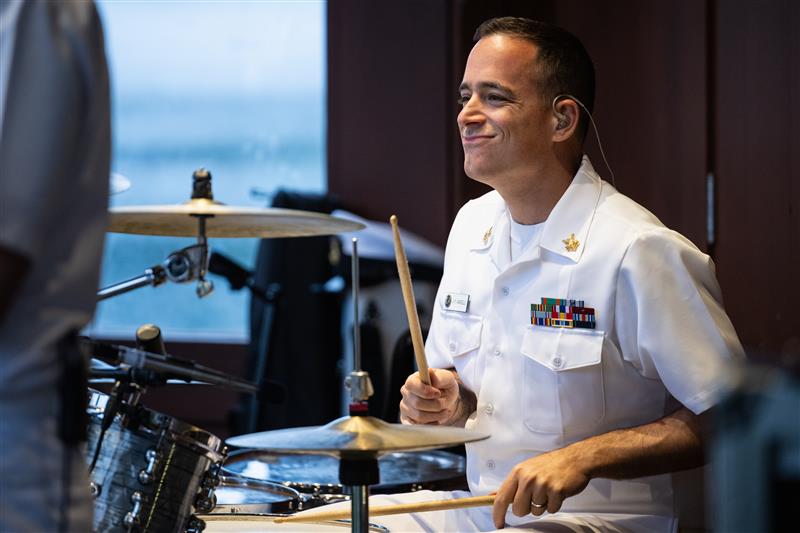
Percussion as a Style Anchor
Percussion defines march style more than many ensembles realize. The conductor must have a clear concept of the sound they desire to create.
- Snare articulation should reinforce style, not dominate texture.
- Bass drum weight must support phrasing and structural arrival points.
- Cymbal choices influence brilliance and clarity.
- Percussion supports articulation language across the ensemble.
Percussion drives character, not just time.
Style and Historical Context
Not all marches share the same stylistic expectations.
- Sousa and American concert marches favor buoyancy and lift.
- Fillmore and circus traditions emphasize brilliance and rhythmic precision.
- European military traditions often favor broader phrasing and heavier articulation.
Understanding tradition informs interpretation.
Rehearsal Applications for Directors
Strong march performance emerges from intentional rehearsal.
- Rehearse trio scoring separately to explore color and balance.
- Isolate strains to refine articulation before full runs.
- Record rehearsals so students hear clarity and alignment issues.
- Plan orchestration and dynamic shaping before performance.
Marches reward detail-oriented preparation.
Final Perspective
March performance is a diagnostic tool for ensemble maturity. If a band can perform a march with clarity, balance, articulation, contrast, and style, it can perform almost any repertoire effectively.
Treat marches as concentrated studies in ensemble musicianship. When approached with seriousness and intentionality, they become some of the most compelling and energizing works in the wind band tradition.
Interested in digging deeper? Here are some links to more in-depth study of March style interpretation:
Teaching the Great American March by Colonel (Ret) Thomas H. Palmatier, SBO+ Magazine (2019), https://sboplus.net/teaching-the-great-american-march/
Marches: Rehearsal Techniques and Performance Practices by Gene Milford, https://excelciamusic.com/marches-rehearsal-techniques-and-performance-practices/
The March – A Quick Reference Guide An Overview of Interpretation, Performance Guide and Historical Practices by Jim Daughters, Stephen Lytle, & Cody Birdwell (Midwest Clinic Handout), https://www.midwestclinic.org/downloads?type=clinicpdf_1&cid=1091
The Interpretation of the Concert March by Dr. Timothy Rhea, Band Masters Review, Texas Band Masters Association (September 2022), https://apps.texasbandmasters.org/archives/pdfs/bmr/2022_9_rhea.pdf