






 These days I work with mostly church and ad hoc community choirs. They differ from school choirs, mostly in the amount of time spent together on a regular schedule, and how long they have to prepare material for performance. The church choir often has to present new anthems and songs each week, which really can challenge both the singers and director to get the most out of each moment spent together preparing the music.
The intensity of this shortened timeframe has helped me understand the difference between “practice” and “rehearsal.” They are as different as the contrast between what we call left brain and right brain. Practice to me means the mastery of the facts of a piece of music. Rehearsal means the exploration of expression, the storytelling of the piece.
Whatever group I work with, we start by listening to a good recorded version of the piece to plant the seeds for later right brain use. We’ll sight read without singing as we listen through the recording, scan the music and imagine the results we can enjoy together when we’re ready. We’ll share a few observations about the piece, and then begin our practicing.
Step one is to master the pitches and rhythms we’ll be singing. Subtleties of rubato, inflection, and dynamics come later in this process. For now it’s accuracy to the notation so that whatever we do we do together. Loud, soft, fast, slow, nothing more nuanced than that. I’m sure all of us have spent time counting and clapping rhythms to lift the music off the paper, then either by solfege or interval ID making sure our pitches are accurate to the score. This process stocks the shelves of our left brain until we can comfortably draw on this information when we start to rehearse. This is when I’ll ask the singers to study their part at home between meetings so when we start rehearsing the mechanical, part of the learning will be done. Practice, practice, practice – this is the job part of our adventure, all done in preparation for the rehearsals to come.
Then the real adventure begins. We have the notes and rhythms. The ingredients have been identified and assembled. Now it’s time to mix and bake the pie! I’ve found that the quickest way to have a meaningful rehearsal is to concentrate on the breathing. We’ll identify phrases and intra-phrase dynamics by the breaths involved. If we breathe together, we sing together. Sectional dynamics can easily be added to this, and storytelling of the music starts to appear nicely.
At this part of our journey to bring the piece to life I’ll ask the singers to listen to each other more intently. This can be difficult for some if the music involves a lot of counterpoint, but is a necessary part of rehearsal in order to unify the sound of the choir. As director I’ll keep us singing sections and phrases without being too picky about small details as the singers express themselves and find each other. As soon as we’re ready I’ll have us build out the dynamics of the whole piece, including soloists, descants, etc. to finish the storytelling aspect of our interpretation. And yes, I said interpretation. Each choir, each performance is different. I listen as we rehearse and see how we can make the piece our own, highlighting the unique combination of voices we have. We’ve heard and learned from the original recording. That was them, this is us.
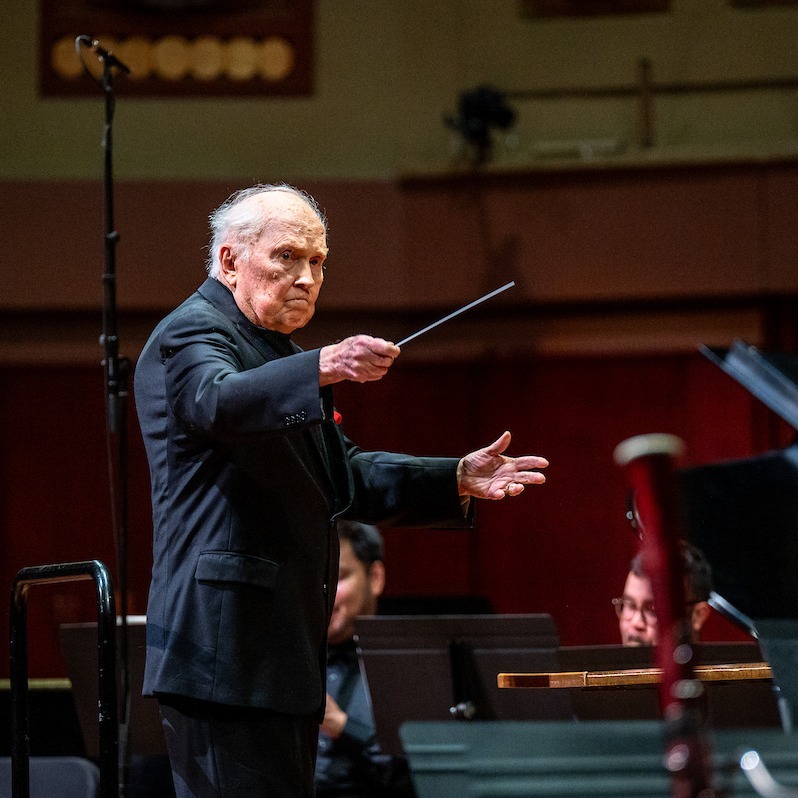
And finally, the performance. I’ll limit my comments about this to something I heard one of my true mentors Tony Allo say years ago to a college band/ choir combination as they warmed up to go on stage for their big Spring concert. They started descending into the minutia of one of the pieces as they prepared their sound, and things got a bit tense as their confidence waned. Tony finally stopped them, put down his baton and said, “Folks, today is not about practicing, it’s about performance. What you are today is what the audience is going to see and hear. If you want to work on something today, work on your attitude. We love music. We love doing this together. Let them see that. Let them feel that. They’ll love this concert as much as you do.” And they did.
Fred Bogert has spent the last 45 years in the music business. He has produced, written for and performed on three Grammy-nominated CD’s, as well as appearing as composer, producer and performer with a variety of artists, from John McEuen and David Amram to the Austin Symphony and the Nashville Chamber Orchestra. Fred’s Nashville studios included RCA Studio B and Studio C, where he recorded over three thousand songs for a who’s who of independent artists. His website is fredbogert.com, and his choral scores are available on sheetmusicplus.com.