






A version of this was published in September 2019 and it still ranks as one of the most read articles on SBO+. I’ve updated it to reflect some of my lessons learned over the past five years.
In doing clinics and adjudications all over the country, I get to see hundreds of bands each year. They all have different instrumentation and perform in widely different environments for both rehearsals and concerts. Therefore, it is not feasible to say, “this is how to set up your band.” However, there are some basic principles that will facilitate the best aural experience for the musicians and the audience.
First, every instrument has a different method of projecting sound. Brass instruments obviously project from their bell (which don’t all face the same way), while some woodwind instruments emanate sound from their tone holes much more than out of the bell.
Second, the characteristic symphonic or concert band sound is one where the various timbres blend together. To achieve that, we must carefully place those instruments that are “direct fire” types so they don’t sound overly present, or “in your face,” to the audience.
Third, to build the type of ensemble we all want, we must facilitate good listening and interaction between musicians. You know you have built a great musical team when you stop, and the musicians begin working with each other to fix things they have heard instead of waiting for all directions to come from the conductor.
The following are some basic principles I follow in setting up a band:
– Tubas and bass drum near the center of the band. It drives me crazy when I see the tubas near the edge of the stage on the conductor’s right. The audience ends up hearing the “raw” tuba sound and it is not at all blended with the band. Also, if we are telling our bands to “listen to the bottom,” why would we put the tubas where the band can’t hear them? The reason often given for this placement is they don’t want the tuba sound to be lost in the rafters of the stage. I’d rather hear a band that’s slightly light on the low end than suffer through an unblended and disconnected tuba sound. Additionally, locating the tubas near the bass drum is critical if we expect them to produce a cohesive rhythmic pulse for the band.
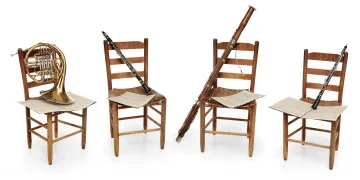
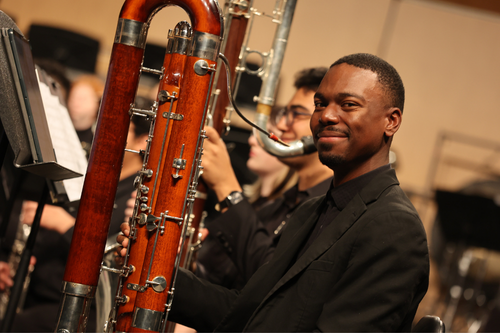
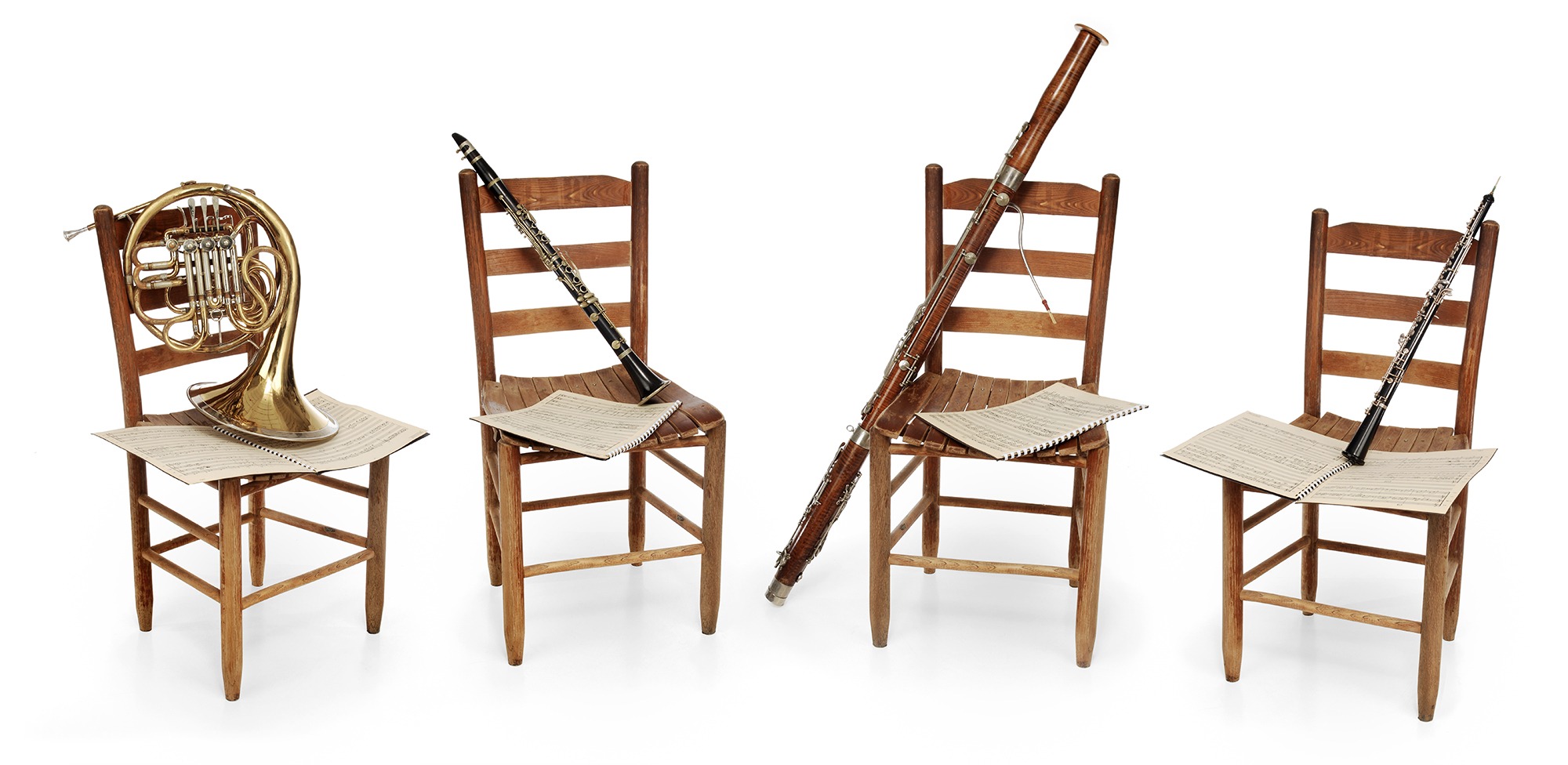
– Double reeds near the front of the stage. The only timbre in the concert band different from the marching band is the double reed sound. Much of the bassoon sound emanates from the tone holes. If you put them in the middle of the band, they are just very expensive firewood. The oboes also emanate sound from the tone holes but the tone that comes from the bell can be a little harsh. Therefore, I usually put oboes in the front row to my right with bassoons right behind them. If there are too many flutes for this to be possible, I sometimes put oboes in the second row, to my right, on the end.
– French horns to my right and if you have four or more, stack them (half in the last row and half in front of them). When horns are in line in the middle of the band, all they can hear is the horn to their left and the trumpets behind them. Hornists, especially young players, need to be able to hear themselves to find the correct partial. Stacking them allows each player to hear all the others. They do need a reflective surface behind the back row. Luckily, a 4’x8’ table on its side is a fantastic horn reflector. When I see the horns to the conductor’s left, it often has the same effect as putting the tubas on the conductor’s right. The audience hears an unblended horn sound and the band can’t hear the horns.
– Piccolo in the second row (if you have a lot of flutes). When the piccolo is in the front row, and especially at the front of the stage, their sound will be separate from the band’s. Also, there’s no way they can play soft enough when in such an exposed position. In the second row, they can hear the band better, tune more effectively, and not have a hand in their face all the time. Additionally, this is very important. A conductor who always has the piccolo to their right will suffer high end hearing loss in their right ear. If all your flutes are in the front row, put the piccolo in the center so they are farthest from the audience (and you).
– Saxophone section centrally located in the band. I’ve never heard a good band without a good saxophone section. They need to be brass instruments at times and then shift immediately to being part of the woodwind choir. I often see them to the conductor’s far right which makes it extremely difficult for them to hear and blend with other woodwinds. When they are centrally located in the band, the 1st Alto Sax is ideally right in front of the Principal Trumpet with whom they share many parts but is also close to the Principal Clarinet.
– Principal players to the center of the band. Ideally, sections will be developing the concept of listening to and following their principal player. By putting them toward the center of the band, it helps focus listening to the center as well. This places the principal players in proximity to each other, allowing them to hear each other but also to communicate with each other. The only exception is the principal French horn. However, because they no longer have anyone playing into the back of their head, I’ve found they can hear pretty much what the conductor hears.
The diagram reflects an ideal instrumentation, one most of us only dream of! But it does show how a band would be set up using these basic principles. While many directors have very strong and entrenched views of how to set up a group (often modeled on what they saw in college), all I ask is that you think through the logic and try something based on the principles above and see how you and the ensemble feel about it after a bit. Any SBO+ reader can contact me at the website below and send me their instrumentation. I will return to you a diagram of how I would set up your band. I have already done over 100 of these!