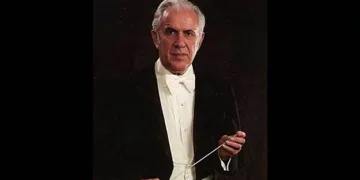

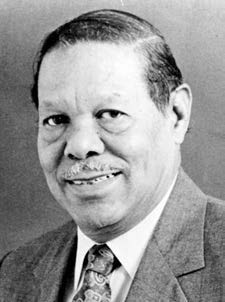



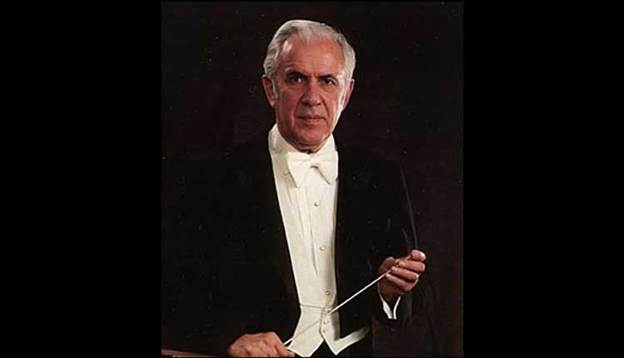
By Dr. Harry Begian
This is the second of three articles excerpted from the 1991 dissertation, “Program Trends of the Michigan State University Bands,1967 to 1988” by Dr. Richard Johnson. These excerpted articles reflect the thoughts of Dr. Begian about the wind ensemble movement and programming music for bands.
I’m not convinced after some thirty-five or forty years of hearing and conducting wind ensembles. The only wind ensemble that has afforded me real listening pleasure is the Netherlands Wind ensemble. I listen often to their recordings. I wouldn’t walk across the street to hear a program of “just contemporary music” or “just wind ensemble music” played by the finest wind ensemble you could name. But I would, any chance I got, go and hear the Netherland Wind Ensemble, because they play with musical sensitivity and they play music of master composers. They don’t have the attitude that because the piece was written by a certain professor at a certain university it deserves to be played, performed, or presented to an audience. Most composers of the past – (so called “great” composers) – wrote some things we never hear anymore because they (the music) have not stood the test of time. Many of the pieces we are hearing for wind ensemble now won’t last. They will get a flurry of performances for one year, and they will be gone. The Schwantner piece you’ll hear, because the Schwantner is a fine work. It’s a sincere piece. Too much of the music that’s written for wind ensemble is contrived music which expresses little or no musical beauty or listening pleasure. Also!! If it’s got any kind of melody that suggests the early twentieth century, wind ensemble conductors shy away from it. I speak with a passion about all this, because for a long time I thought I must be “out of it” since I didn’t buy the wind ensemble notion after testing it at Michigan State University. I thought I must be terribly wrong, since most conductors were hopping on the “wind ensemble wagon.” I’m not the only right guy and all these guys – who are good musicians – they can’t all be wrong? But as time went by, I came out of that and felt I wasn’t just rationalizing. It was in what I heard musically. After all, music is sound. If the sounds you hear are not good sounds, why do we have to hear the ugly or displeasing sounds that can be produced on a musical instrument? Why do we have to hear ugly sounds? Why the dwelling on just what is highest, what is lowest on instruments, or that which is fastest, and with just a chance that maybe something musical will come out of it? I haven’t heard anything that would be in the league with the “Grand Partita” (Serenade in B-Flat, K 370a), which is probably the first “wind ensemble” piece. So, I regard the “Grand Partita” by Mozart as the first band piece. I don’t object to the word “band,” as you know; there is nothing wrong with it. The English still use it to describe an orchestra as “the band.” Whatever you call it, it’s still a group of wind instruments plus percussion.
In comparing the instrumentation, these band conductors who are so fond of the wind ensemble, would also be fond of just the chamber orchestra of the time of Haydn of roughly thirty-five players! The symphony orchestra developed over three hundred and fifty years and its literature along with it. Up to the time of Mahler, the orchestra grew larger, incorporating more players, more instruments and developing more diverse sounds. In looking at the instrumentation of the symphonic band, which is modeled after the instrumentation of the twentieth-century symphony orchestra, one can see similarities in balanced instrumentation. Now whether the composer exploited all those capabilities of the symphonic band, that’s another story. The ones who are closest to it in our time are Percy Grainger and Alfred Reed. I think Alfred Reed is probably the best “band” composer operating now. Alfred Reed has a craft. Alfred Reed has a background and is knowledgeable enough in styles and types of music. He is studied, he is very capable, and he has a command of his craft and can write in many different genres. He doesn’t have to “soup” his music up to have it played. I know, your generation of band conductors say it has too much of the same stuff, so it’s not good. It’s got too much melody in it. What the hell is wrong with melody? That’s what I’d like to ask most of these guys that shy away from any piece of music that employs a recognizable melody in it. Audiences will never turn out for concerts to which they cannot relate! They will turn out for a replication of the Sousa Band concert. They’ll jam the hall!! If band conductors who favor the wind ensemble would take a hint from that and take a hint from the Hart book on the “new generation of conductors,” they’d get audiences!! (Hart, Philip. Conductors: A New Generation).
The various divertimenti, cassations, and serenades of Mozart hint at the development of wind instruments and players of his time shows that he took them seriously. At the same time, I think the “Grand Partita” is a landmark!! Fred Fennell, in Illinois, when I was just in my first or second year there, was at the Wind Ensemble Conference at Illinois. We were sitting together at a lecture given by one of the wind ensemble conductors. The lecturer had just finished denouncing all transcriptions as bad, declaring they should not be played by wind ensembles. Frederick Fennell turned to me and said, “God, Harry, I don’t know what these guys are doing! I don’t understand the direction they are taking the wind ensemble!” He said, “You know that I’ve always played transcriptions – this (the lecture) wasn’t what I had in mind when I created the Eastman Wind Ensemble.” He finally said, “I created the Eastman Wind Ensemble for two reasons: to get bands accepted at the Eastman School of Music, and acceptance in the music world.” He felt he could achieve both goals by reducing the size of the instrumentation of his band – by using only the finest players and by performing all the music in a highest professional manner. The direction in which the other conductors carried that idea is entirely a different matter.
You may also like:
 How to Select Saxophone Reeds By Tracy Heavner
 The 22nd Annual 50 Directors Who Make a Difference
 2013 ’50 Directors Who Make a Difference’ Report
 UpClose: A Talk with Donald Hunsberger and Mark Davis Scatterday, Conductors of Frederick Fennell’s Legendary Eastman Wind Ensemble.
 Clarinet Reed Adjustment and Care