




• Latest
  • Trending
Policy Paradox: Accountability in Arts Education

Policy Paradox: Accountability in Arts Education

June 17, 2026
Ten Commandments of Programming

Ten Commandments of Programming

June 15, 2026
Closing This Chapter and Looking to the Next in Our Ensemble Programs

Closing This Chapter and Looking to the Next in Our Ensemble Programs

June 12, 2026
ADVERTISEMENT
Teaching Theater Kids about the Importance of Correct Phrasing

Teaching Theater Kids about the Importance of Correct Phrasing

June 11, 2026
An Inspiring Story

An Inspiring Story

June 9, 2026
Headlines

Headlines

June 8, 2026
Add This to Your Bucket List

Add This to Your Bucket List

June 4, 2026
Breathe – Then Reinvent Yourself

Breathe – Then Reinvent Yourself

June 1, 2026
New Products

New Products

May 28, 2026
Translating Emotion to Expression: Five Strategies to Try

Translating Emotion to Expression: Five Strategies to Try

May 27, 2026
Sidney Harth’s Bowings for the Beethoven Symphonies 

Sidney Harth’s Bowings for the Beethoven Symphonies 

May 29, 2026
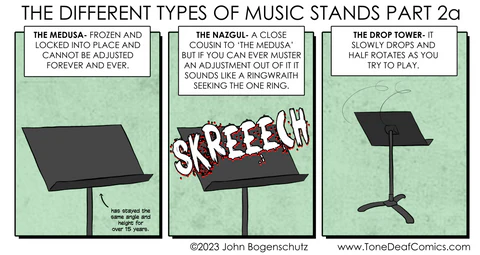
The Different Type of Music Stands – Part 2a

The Different Type of Music Stands – Part 2a

May 22, 2026

If You Can’t Beat ‘Em, Join ‘Em

May 21, 2026
Wednesday, June 17, 2026
  • Contact
SBO+
  • Advertise
  • Subscribe Free!
    • Manage Subscription
  • Departments
    • Choral
    • String Section
      • String Section
    • Concert Band
    • Modern Band
      • Mariachi
    • Orchestra
    • Instruments
      • Woodwinds
        • Wind Talkers
      • Percussion
        • GoodVibes
      • Repertoire
      • Playing Tips
    • Marching Band
    • Resources
      • Fundraising
    • Jazz
    • Brass
    • General Music
    • Advocacy
      • NAfME Neighborhood
      • MAC Corner
      • MusicEd: Mentor Minute
    • Commentary
      • Bubbett’s Bookshelf
      • Leadership Tips
      • Perspective
      • InService
        • America’s Bandmasters
        • America’s Musicians
      • Tone Deaf Comics
    • Features
    • News
      • Headlines
  • Current Issue
    • Past Issues
  • Support
  • Awards/Entries
    • 50 Music Teachers who Make a Difference
    • Teachers’ Choice Awards Nominations
No Result
View All Result
  • Advertise
  • Subscribe Free!
    • Manage Subscription
  • Departments
    • Choral
    • String Section
      • String Section
    • Concert Band
    • Modern Band
      • Mariachi
    • Orchestra
    • Instruments
      • Woodwinds
        • Wind Talkers
      • Percussion
        • GoodVibes
      • Repertoire
      • Playing Tips
    • Marching Band
    • Resources
      • Fundraising
    • Jazz
    • Brass
    • General Music
    • Advocacy
      • NAfME Neighborhood
      • MAC Corner
      • MusicEd: Mentor Minute
    • Commentary
      • Bubbett’s Bookshelf
      • Leadership Tips
      • Perspective
      • InService
        • America’s Bandmasters
        • America’s Musicians
      • Tone Deaf Comics
    • Features
    • News
      • Headlines
  • Current Issue
    • Past Issues
  • Support
  • Awards/Entries
    • 50 Music Teachers who Make a Difference
    • Teachers’ Choice Awards Nominations
No Result
View All Result
SBO+
No Result
View All Result

Policy Paradox: Accountability in Arts Education

June 17, 2026
in June 2026, Advocacy
Share on Facebook
Rovner
ADVERTISEMENT
By Laurie T. Schell, Elevate Arts Ed

Money and policy are usually cast as the engines of accountability. In arts education, though, the story is messier. The real question is what actually drives accountability—and what states can do when the formal levers are weak, uneven, or easy to ignore.

To get at that question, I paired Arts Education Partnership’s (AEP) ArtScan policy data with access and participation data from the Arts Education Data Project. What emerges is a familiar but uncomfortable truth: supportive policy, by itself, does not reliably translate into access or participation. Accountability depends just as much on how policy is interpreted, implemented, and enforced.

Policy Paradox

That is the policy paradox: what states require on paper is not always what students experience in practice. California has long been a vivid example. A 2022 SRI Education study found that 79% of school leaders reported offering at least one of the four required arts disciplines, yet only 11% of schools offered a sequential, standards-based course of study in all four disciplines, as state policy requires—essentially unchanged since 2005–06.

California is not an exception, though it may be starting to narrow the gap through major funding with the Arts and Music in Schools Funding Guarantee and Accountability Act (AMS) and new audits tied to how those funds are used. Across other states, the same pattern shows up: strong arts instruction policies on the books, participation rates still hovering in the 50–60% range, and as many as 13% of students left without access.

Focus on Instructional Requirements

One useful place to look is instructional requirements, because they reveal how seriously a state expects its arts standards to be taken. According to ArtScan, all fifty states have elementary and secondary arts standards; 40 have some instructional requirements in elementary or middle school, 39 in high school, and 12 have none.

These requirements vary in strength: policies that say the arts “must be taught” or specify minutes or course counts are stronger, while phrases such as “shall provide” or “shall have experiences” allow more variation in implementation.

Policy Overlay with Participation and Access

If instructional requirements are among the clearest policy levers available, we should expect them to produce stronger access and participation. But the data resists that tidy conclusion.

A snapshot of nearly 20 states shows participation rates from 52% to 83%, a wide spread among states that mostly have good to excellent policies.

The contrast becomes even harder to ignore among the 12 states with no instructional requirements: two still report high participation rates of 78.8% and 64.7%. That is a strong signal that accountability is shaped by more than policy, testing, or funding alone.

Accountability Levers That Drive Educational Goals

So, if policy and funding do not fully explain accountability, what does? Which levers actually move arts education from formal compliance to something that is visible, valued, and hard to sideline?

  • Assessment: What gets measured gets prioritized. Even if the arts are rarely high stakes, they can be embedded in state accountability systems or “Profile of a Graduate” frameworks.
  • Leverage: Funders can strengthen accountability by tying grants to concrete district commitments, such as full-time credentialed arts teachers.
  • Budget: Because arts education rarely appears as a single budget line, advocates need to understand district budgeting and propose practical, equity-focused funding solutions.
  • Influence: Champions and coalitions can raise arts education on the agenda by shaping public and institutional priorities.
  • Priorities: District planning, community engagement, and cross-sector partnerships can help show the value of arts education beyond test scores.
  • Student Demand: Graduation requirements, diploma seals, and course pathways may increase demand and expand arts offerings.

Accountability is a constant in education, but the arts have never fully claimed their place in that conversation. If arts education is going to do so, it will need to show not only that it is required, but that it advances the larger purposes of schooling in ways that matter and are difficult to dismiss.

Laurie Schell Associates | ElevateArtsEd

You may also like:

The 2014 Best Communities for Music Education Report: 50 Directors The ESSA and What It Means for Music and Arts Education SBO Presents the 18th Annual 50 Directors Who Make A Difference Report The Road Ahead for Music and Arts Ed: Keeping it Human
Sweetwater
ADVERTISEMENT
ADVERTISEMENT

POPULAR STORY

  • New Products December 2025

    New Products December 2025

    1791 shares
    Share 716 Tweet 448
  • Holiday Gift Guide for Music Businesses: Tools to Boost Engagement and Growth

    1713 shares
    Share 685 Tweet 428
  • 50 Music Teachers Who Make a Difference

    1416 shares
    Share 566 Tweet 354
  • When Selecting New Choral Music, Choose Success

    1299 shares
    Share 520 Tweet 325
  • 2025 Teachers’ Choice Award Winners

    1186 shares
    Share 474 Tweet 297
ADVERTISEMENT

SchoolMusic.Travel

No articles found.
  • June 2026

    Articles | Digital Issue
  • May 2026

    Articles | Digital Issue
  • April 2026

    Articles | Digital Issue
  • March 2026

    Articles | Digital Issue
  • February 2026

    Articles | Digital Issue
© 2005 - 2026 artistpro, LLC
7012 City Center Way, Suite 207
Fairview, Tennessee 37062
(800) 682-8114

No Result
View All Result
  • Advertise
  • Subscribe Free!
    • Manage Subscription
  • Departments
    • Choral
    • String Section
      • String Section
    • Concert Band
    • Modern Band
      • Mariachi
    • Orchestra
    • Instruments
      • Woodwinds
      • Percussion
      • Repertoire
      • Playing Tips
    • Marching Band
    • Resources
      • Fundraising
    • Jazz
    • Brass
    • General Music
    • Advocacy
      • NAfME Neighborhood
      • MAC Corner
      • MusicEd: Mentor Minute
    • Commentary
      • Bubbett’s Bookshelf
      • Leadership Tips
      • Perspective
      • InService
      • Tone Deaf Comics
    • Features
    • News
      • Headlines
  • Current Issue
    • Past Issues
  • Support
  • Awards/Entries
    • 50 Music Teachers who Make a Difference
    • Teachers’ Choice Awards Nominations

© 2005 - 2024 artistpro, LLC 7012 City Center Way, Suite 207 Fairview, Tennessee 37062 (800) 682-8114

Wenger Transcend Ad
Wenger Transcend Ad