Eight measures can hold a complete musical decision: an opening idea, a return, a change, and an ending. They are also short enough for students to hear what they have made and revise it before the project disappears into a recording deadline.
Give the class a brief that names the work. For this project, students will create an eight-measure melody in 4/4, use a limited pitch collection, repeat an identifiable idea, change it once, and explain one revision. Lyrics and accompaniment may follow, but neither is required to demonstrate the first objective.
Set a playable boundary
Choose a pitch collection and register the class can sing or play comfortably. C-D-E-G-A is one possible collection. A beginning instrument class may need fewer pitches. Keep available rhythms within the vocabulary students have already performed.
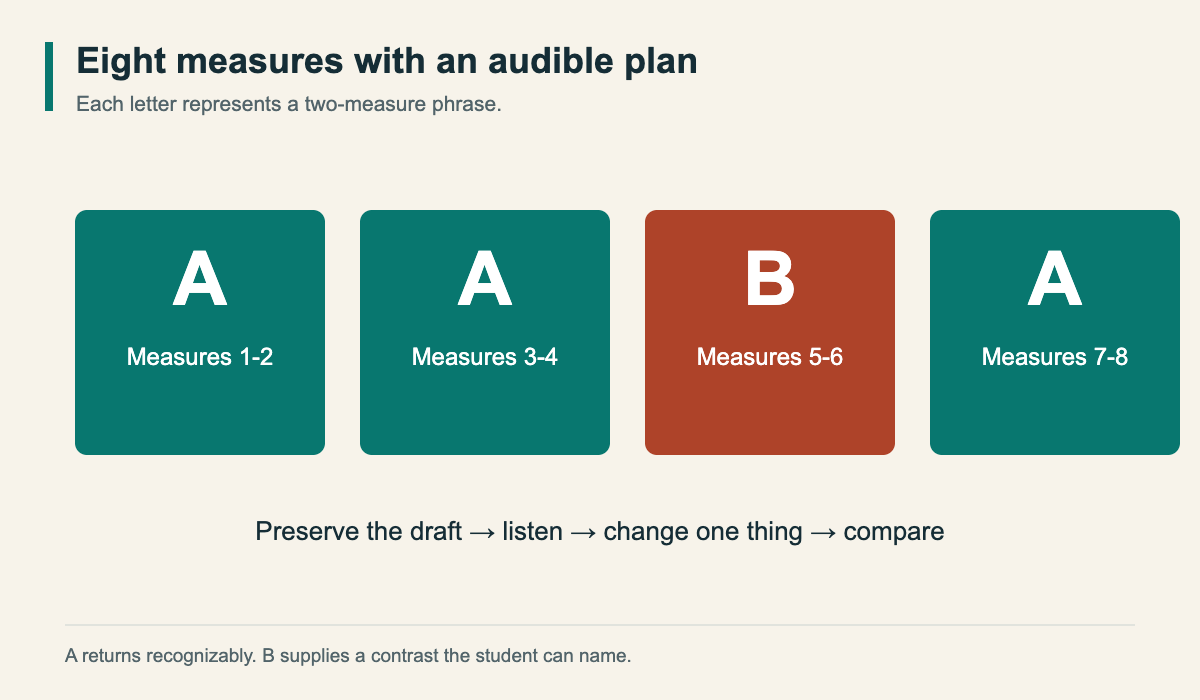
Use an A-A-B-A plan, with each letter representing a two-measure phrase. A returns recognizably each time. B must differ in a way the student can name: contour, rhythm, starting pitch, or another agreed feature. The plan is a working constraint, not a definition of all songs.
Have students describe the intended character with musical choices. "A quiet opening using repeated notes, followed by a higher contrasting phrase" gives them something to make and later evaluate.
Save the first idea
Students write or otherwise preserve phrase A before adding accompaniment, production effects, or generated material. The record can be notation, MIDI, or a teacher-approved representation accurate enough to reconstruct the rhythm and pitches. A vague description of the idea is not a substitute for the idea itself.
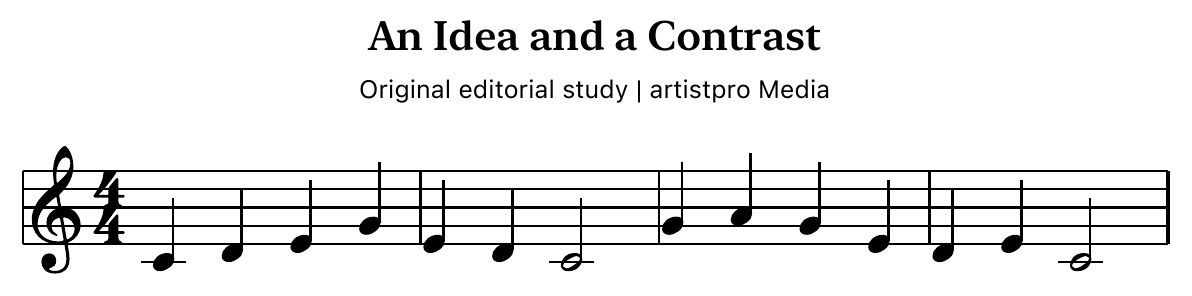
The accompanying apScore page supplies a four-measure demonstration of an idea and a contrast. It is a model to inspect, not material students must copy. Ask them to identify which rhythmic feature returns and which pitch movement changes.
Give the partner a specific listening job
One student performs or plays back the draft while a partner follows the record. The partner answers three questions: Can I identify A when it returns? Can I locate the contrast? Does the ending sound intentional?
Feedback should name a location and an observation. "The second phrase starts on the same pitch but uses a different rhythm" is useful even before the partner decides whether to suggest a change. "Make it more interesting" is too broad to guide revision.
Change one thing and compare
Ask the composer to choose one revision, preserve the earlier version, and perform both. A student may move the contrast higher, shorten the ending, or place a rest before the final note. The explanation must match the actual change.
Students can keep the original after comparison if they explain why it serves their intent better. Revision is a musical investigation, not a requirement that every first choice be rejected.
Add lyrics or technology only when they serve the task
For lyrics, begin with one short line and test its natural speech stress against the melody. Allow instrumental work when words do not serve the objective.
If approved generative assistance is used later, students first preserve their own melody, rhythm, form, and any lyrics or harmony they claim as their work. Specify what the service may realize and what it must preserve. Compare the result with that source, mark discrepancies, and keep human revisions and accurate contribution credits. A generated singer is not evidence of the student's singing, and a newly generated melody is not evidence that the student composed it.
The same project can be completed entirely with voices, instruments, paper, and teacher support.
Grade the evidence you can hear and inspect
Use four criteria: clear musical idea, recognizable return and contrast, accurate record, and an explained revision. Judge each against the brief and the student's demonstrated choices. Production polish should not outweigh the musical work the assignment was designed to reveal.