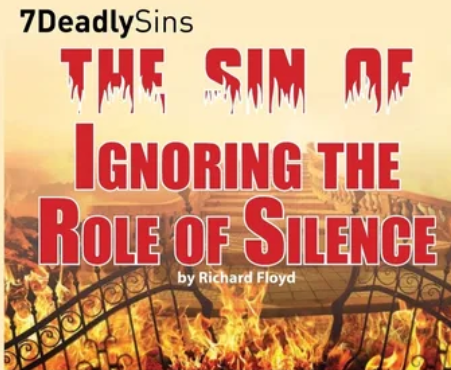











What is the big deal about silence? Our hands go up, our hands come down, and the music starts. Then one of our goals, among many, is to make sure no one plays in a rest, and we all achieve unified silence at the end of the final measure. As the music unfolds, we navigate countless challenges of notes, rhythms, tuning, balance, blend, dynamics, line and so forth. There is more than enough to do. So, as we address these pleasures of music making, how can those moments where there is no sound be so important and worthy of our thoughtful reflection?
In truth music emerges from silence, travels over or through silence and ultimately returns to silence. Pablo Casals states in his book Casals and the Art of Interpretation that the silences are also music. To put it another way, Leopold Stokowski said,” A painter paints pictures on canvas but musicians paint their pictures on silence.” Think if it as you will, there is a lot to unpack here.
Let’s start first with the silence that precedes the music. I would propose the first notes sounded must be in context to the music that is about to unfold. It is not enough just “to start together” at a predetermined volume, precisely with the throb of a metronome. There is much more to consider. Do the opening sounds immediately conquer the silence or perhaps gently emerge out of the quiet? Does the music surface with boldness or timidity. Are the opening utterances commanding attention or gently inviting the listener into the music? Before there is sound, there is always meaning…always. Only then can the music begin to unfold with meaning.
The significance of silence continues as the music unfolds. Lesley Sisterhen McAllister, piano professor at Baylor University, states rests provide a respite from the tense moments, add suspense, or provide clear breaks between phrases or sections. Rests can serve all these functions and many more. Perhaps the most important consideration is to think of rests as silent notes. They must have context and remain integrated into the tapestry of the music. Later in his book, Casals goes on to say that if the line of feeling remains unbroken the silences will take on expressive intensity. (Refer to Sin No. 5 – The Absence of Line). Above all, the rests are never just a place for the clarinets or flutes to breathe.
Does every rest require this level of contemplation? Probably not. In truth, some rests are just that: rests. They punctuate the music and nothing more. But there must always be the underlying contemplation of deeper musical meaning. To do any less is a transgression.
The way notes are released into silence is also a factor. In many cases the release must not be rhythmically precise. Perhaps the release should be lifted or shaded into the silence. A persuasive example of this approach might be the opening eight measures of Eric Whitacre’s band setting of Lux Aurumque. In measures 2, 4, 6, and 8 there is a tutti dotted half note followed by a quarter note rest. The composer states the sensation he is seeking is the illusion of inhaling for four counts and exhaling for four counts. If that dotted half note is released precisely on the ictus of beat four the magic of the moment is lost. I often tell students to “smear” the note into the rest, so it simply evaporates.
In other music, the rests might simply be punctuations in a rhythmic ostinato. In such scenarios the rest must be viewed as crisp, energy filled, rhythmic silence intended to help sustain a rhythmic motor that underscores the music as it unfolds.
Finally, we must ponder the silence following the music. How does the music ultimately reenter the silence? Does it end with power and intensity such as the fifth and sixth movements of Grainger’s Lincolnshire Posy or the final movement of the Persichetti Symphony for Band? In such music, an audience response is generally spontaneous and immediate.
Conversely, some pieces of music simply never stop. They just disappear or evaporate into the silence. Examples of this kind of closure might include Balmages Rippling Watercolors, Grainger’s Irish Tune from County Derry, or Whitacre’s Sleep. The music fades away like blowing out a candle and watching the smoke fade away.
And once the music stops and the concert hall is filled with silence, how long does one hold that silence? The ending of some works calls for reflection. A quiet moment for the audience to ruminate on what it has just experienced and heard. Perhaps the silence is viewed to be an extension of the final note thus requiring a respite for the music to seek it’s final resting place.
Musical silence comes in many guises. It plays countless roles. In the final analysis, what we are seeking is a union between the sounds and the silences of music. Without an awareness of and a relationship with silence, there is no context for making music.
GIAmusic.com
Forthcoming will be a discussion of our seventh and final sin. The sin of failing to consider the role of proportion. All our sins are explored in detail and accompanied with extensive excerpts in The Seven Deadly Sins of Music Making by Richard Floyd and published by GIA.