












 Developing a front-line mallet ensemble for a marching band can take years. Once you have the solid front ensemble, it will be a very powerful force for your marching band.
Here are some helpful hints to help in this process.
Equipment
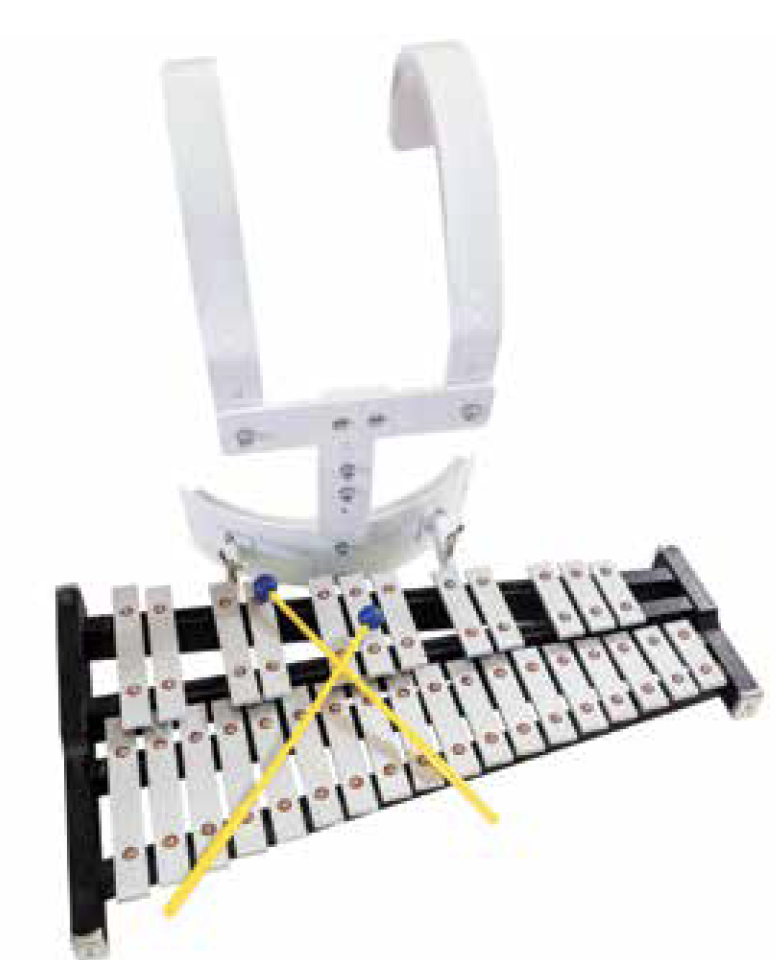
Buying all of the necessary equipment could take a few years. Some band programs have a great budget, and some have to scrape. Whatever level your program is at with budget, there are some crucial instruments you need to have. Two 4 1/3 octave marimbas, two vibraphones, one set of bells, one xylophone, one set of chimes, three or four timpani, and an auxiliary percussion section is a solid start. The auxiliary percussion section should include a concert bass drum and a trap table with small percussion hand instruments. I recommend the Jeff Moore Outdoor Percussion Mallet Series sold by Salyers Percussion. These mallets have wonderful tone, depth, and articulation. Every year after DCI, many drum and bugle corps sell their mallet equipment for extremely cheap. Contacting them is a great way to find less expensive instruments that are only a year old.
Find a Competent Instructor
This is probably the most important aspect of the front-line development. Make sure you find a qualified and experienced instructor for your kids. Someone who has performed in a drum corps front line ensemble is highly recommended.
Exercise Book
Your students will need an exercise book that goes through all twelve major scales in both the circle of 4th and the circle of 5ths. Of course, this also requires a thorough knowledge of the scales. If they are struggling, start with the flat keys, as those will be the most prominent keys in marching band arrangements. Developing proper mallet technique within the exercises is extremely crucial. “Eight on a Hand” going through all twelve major scales is a good place to start. Full wrist extension and proper stroke is important in developing power and stamina. Even at fast speeds, the students should have a fully extended wrist stroke because this is a power and strength exercise.
Qualified Arranger
I cannot stress enough how important it is to have the right arranger for your ensemble. Someone who knows the strengths and weaknesses of your mallet players should arrange the music. The arrangements should have thick harmonies. The mallet parts should complement the horn melodies and drum line rhythms, yet they should deviate as well. This will enable harmonic and rhythmic diversity within your ensemble. There is nothing worse and more boring than watching a front-line ensemble double the horn parts. The front-line ensemble is an art form, and this should be expressed in a very creative arrangement. A great front-line ensemble book sounds amazing, full, and harmonically rich when they perform by themselves. When added to the band, it will be absolutely awesome!
Finding Musicians
Some programs lack a lot of mallet players, but there is still hope. You can be creative as teachers by finding flute and clarinet players who have piano experience (and there are a lot of them). You can’t hear flute and clarinets outside anyway (just joking!) Piano experience makes it very easy for a front-line ensemble teacher to train the students on mallets. In the many years I have taught, it is always amazing teaching pianists because they catch on extremely fast. Once they master the mallet technique, their piano background allows them to play virtuoso parts very quickly!
Teaching by Rote
After your students know their scales and can read music, I have found that teaching the marching band show by rote to the front-line ensemble is amazing for several reason. First of all, they commit the music right to memory. The memorization happens naturally, and you can immediately focus on musicality. You also don’t have to worry about your students having to take music out on the field, and they can watch the drum major. It also takes a lot of stress off the students when they immediately have the music in their memory and no longer use it as a crutch. This way they can focus on musicality and ensemble cohesion. Lastly, it’s a reality that some students can’t read music. Some of my most amazing musicians
I have had in my front-line ensembles couldn’t read music. They always have amazing ears and feel for the music. Teaching by rote may seem like it is taking a long time while you are going through the process. But in the big picture, it moves the learning process forward extremely fast on the field! It is like building a wall. Focusing on one brick at a time seems slow, but it creates great strength and attention to detail and if you keep pushing, you have a very powerful wall of sound before you know it!
In 2016, The Huffington Post called Kevin Lucas “the most talented percussionist since Lionel Hampton, Ginger Baker, and Tito Puente.” He has been nominated for 38 music industry awards for his Echoes in the Sand album, and he won the 2016 American Songwriting Awards.